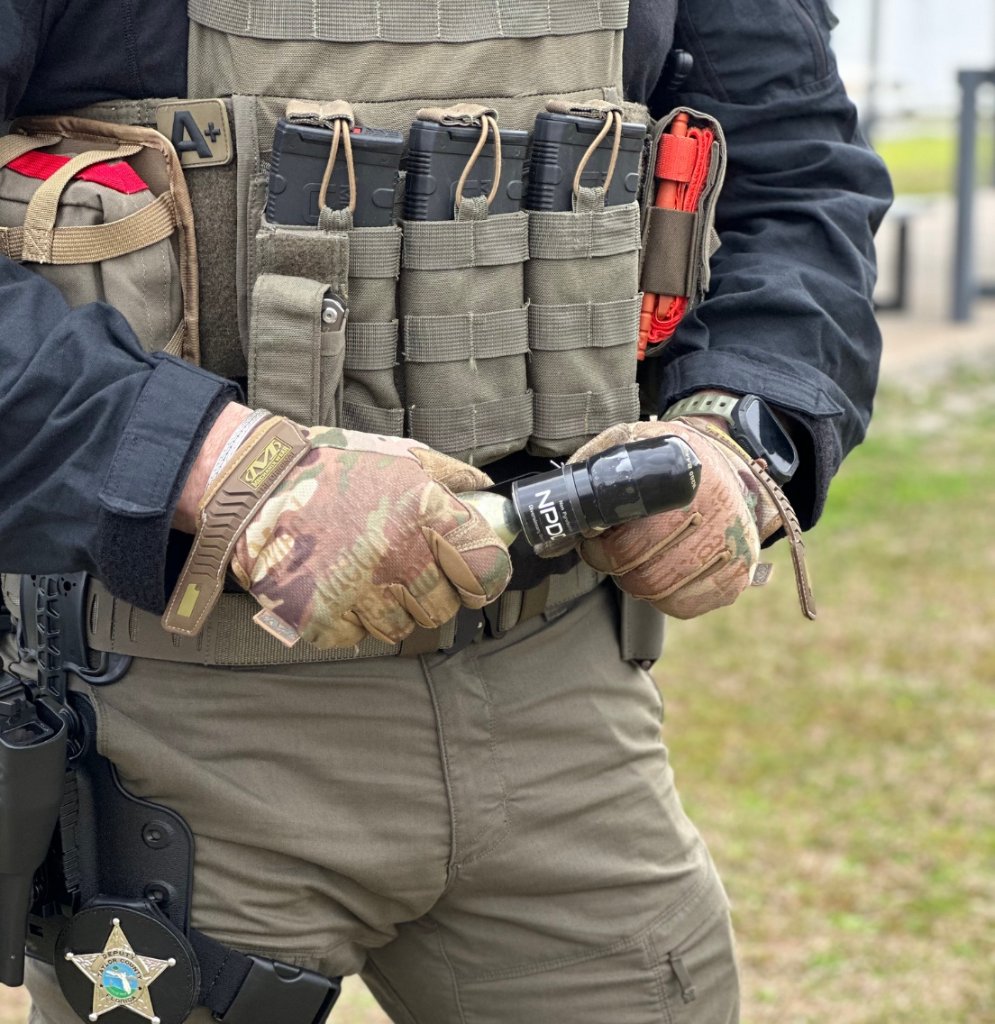
Recent judicial trends are fundamentally reshaping the operational landscape for crowd management, specifically concerning the use of chemical irritants and other less-lethal munitions during extended civil disturbances. Following several high-profile appellate rulings in early 2026, the standard for 'objective reasonableness' is increasingly being measured against the duration of exposure and the availability of exit paths for non-combative individuals. For command staff, these rulings necessitate a rigorous re-evaluation of dispersal protocols and the documentation of force.
Key Details
Emerging case law suggests that the mere declaration of an unlawful assembly no longer provides a blanket legal shield for the continuous application of chemical agents. Courts are now focusing on 'temporal windows'—the specific timeframe in which force is applied—and whether that force was maintained after the immediate threat of violence or property damage had subsided. Furthermore, new mandates emphasize the 'duty to provide egress.' If law enforcement uses less-lethal munitions to disperse a crowd without providing a clear, unobstructed path for retreat, the deployment may be viewed as an unconstitutional seizure. Documentation is also under fire; agencies are now expected to provide granular evidence linking the use of less-lethal tools to specific, articulable threats rather than general crowd behavior.
Broader Context
Historically, the use of chemical agents was viewed as a lower-tier force option designed to prevent physical confrontations between officers and protesters. However, the 2020-2022 era of civil unrest led to a massive influx of litigation that is only now reaching the final stages of appellate review. These 2026 standards reflect a judicial desire to balance public safety with the First Amendment right to assembly. Nationally, several states have already begun codifying these judicial opinions into state law, effectively banning the use of certain chemical irritants in 'static' crowd situations where no immediate physical threat to life or safety is present. This shift represents a move away from 'crowd control' toward 'crowd management,' where the objective is to isolate bad actors rather than engage the entire mass.
Implications for Law Enforcement
For agencies on the ground, these legal shifts require a transition to more precise less-lethal platforms. The era of 'area saturation' is being replaced by a need for point-of-aim accuracy. This impacts procurement, as agencies look toward 40mm launchers and PAVA-based projectiles that allow for the targeting of specific violent individuals within a group. Operationally, it requires the integration of 'egress spotters'—officers dedicated to ensuring that dispersal orders are physically possible to follow. Policy manuals must be updated to include specific language regarding the cessation of force once compliance is achieved or when the immediate threat of violence has been neutralized, regardless of whether the crowd has fully dispersed.
Conclusion
The judicial environment of 2026 demands a higher level of tactical and administrative precision. Command staff must ensure that their crowd management strategies are not only effective in the field but also defensible in the courtroom. By prioritizing targeted engagement over area saturation and ensuring clear communication regarding exit routes, agencies can mitigate the legal risks associated with modern civil support operations while maintaining their commitment to public order. The strategic takeaway is clear: the duration of engagement is now just as legally significant as the decision to engage in the first place.