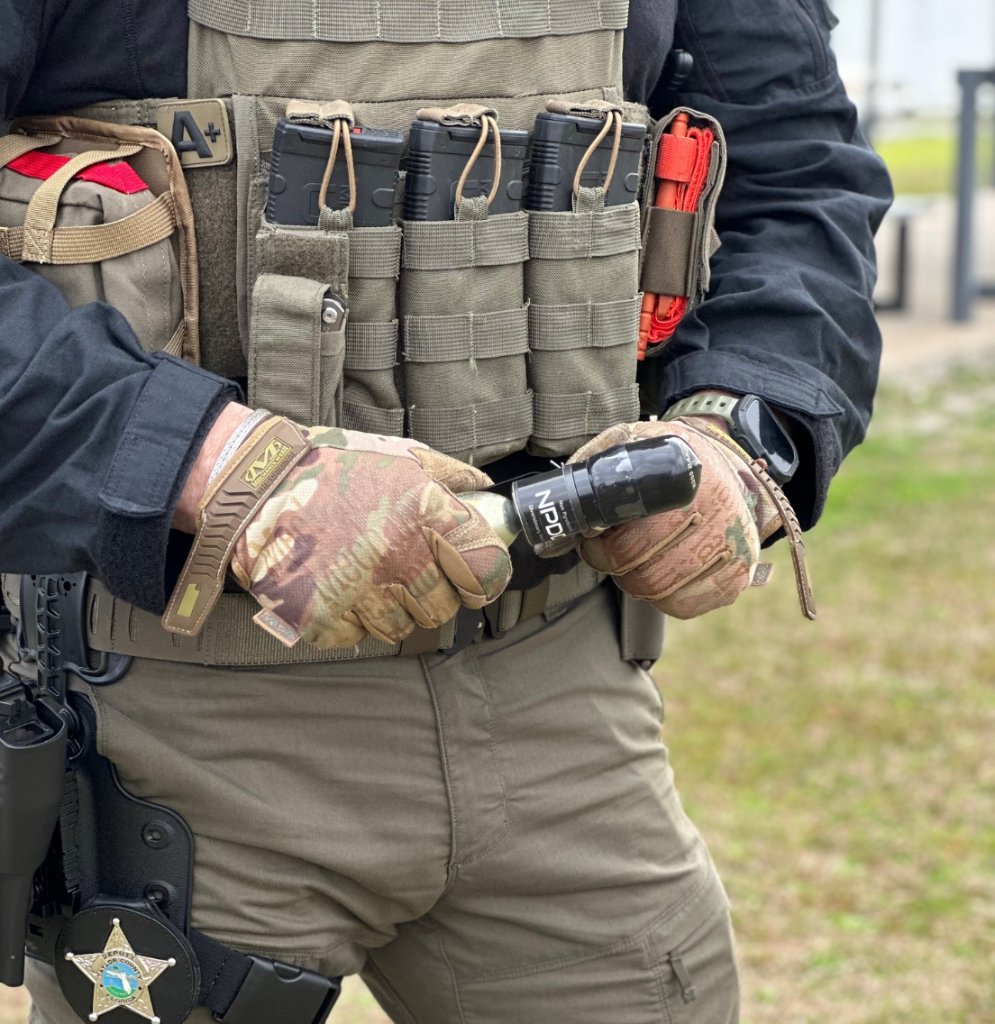
The landscape of crowd management is undergoing a significant legal shift as federal appellate courts refine the parameters of reasonable force regarding less-lethal munitions. A series of recent decisions has underscored that the mere existence of a crowd dispersal order does not grant blanket authority for the used of kinetic impact projectiles (KIPs). Instead, the judiciary is moving toward a standard that requires specific, individualized threat assessments for each deployment of force, even within the context of an unlawful assembly.
Key Details
Recent rulings from the Ninth and Eleventh Circuits have established that the use of foam batons and bean bag rounds must be justified by a specific threat posed by the individual targeted. These courts have increasingly rejected the defense of collective threat as a justification for non-targeted firing into crowds. Legal analysts point to the 2026 mandate that requires agencies to document the specific behavior of the recipient of less-lethal force, rather than citing the general volatility of the protest. Furthermore, the courts are scrutinizing the temporal gap between the warning and the deployment, insisting that officers provide a meaningful opportunity for compliance before engaging with less-lethal systems. This has led to a re-evaluation of dispersal protocols across major metropolitan departments.
Broader Context
For decades, the use-of-force continuum for crowd control relied on the principle of gradual escalation, where less-lethal tools served as a bridge between verbal commands and physical intervention. However, the 2020-2024 era of civil unrest brought unprecedented scrutiny to these tools. The current 2026 judicial environment reflects a broader trend of constitutionalizing tactical maneuvers. This trend is not limited to state-level litigation; the Department of Justice (DOJ) has recently updated its guidance for federal law enforcement, emphasizing that less-lethal force is a precision tool rather than a mass-dispersal instrument. This shift aligns with international standards that categorize KIPs as high-risk implements requiring stringent oversight.
Implications for Law Enforcement
For command staff, these rulings necessitate a comprehensive review of standard operating procedures. Operational plans must now prioritize the deployment of spotters and evidence-collection teams who can document the specific threats justifying the use of a 40mm or 37mm launcher. Training programs must shift away from 'line-of-sight' dispersal toward 'threat-specific' engagement. This requires higher levels of coordination between ground units and command centers to ensure that force is only applied to individuals engaged in active resistance or violence. Failure to adhere to these precision-based standards increases the risk of civil litigation and may lead to court-mandated restrictions on an agency's less-lethal inventory.
Conclusion
The transition toward target-specific engagement represents a maturing of less-lethal doctrine. While it complicates the logistics of crowd dispersal, it also provides a clearer legal framework for officers operating in high-stress environments. Command staff should embrace these standards as a means of legitimizing necessary force and protecting their personnel from legal repercussions. The strategic takeaway is clear: the era of less-lethal force as a broad dispersal tool is ending, replaced by a requirement for surgical precision and detailed accountability.