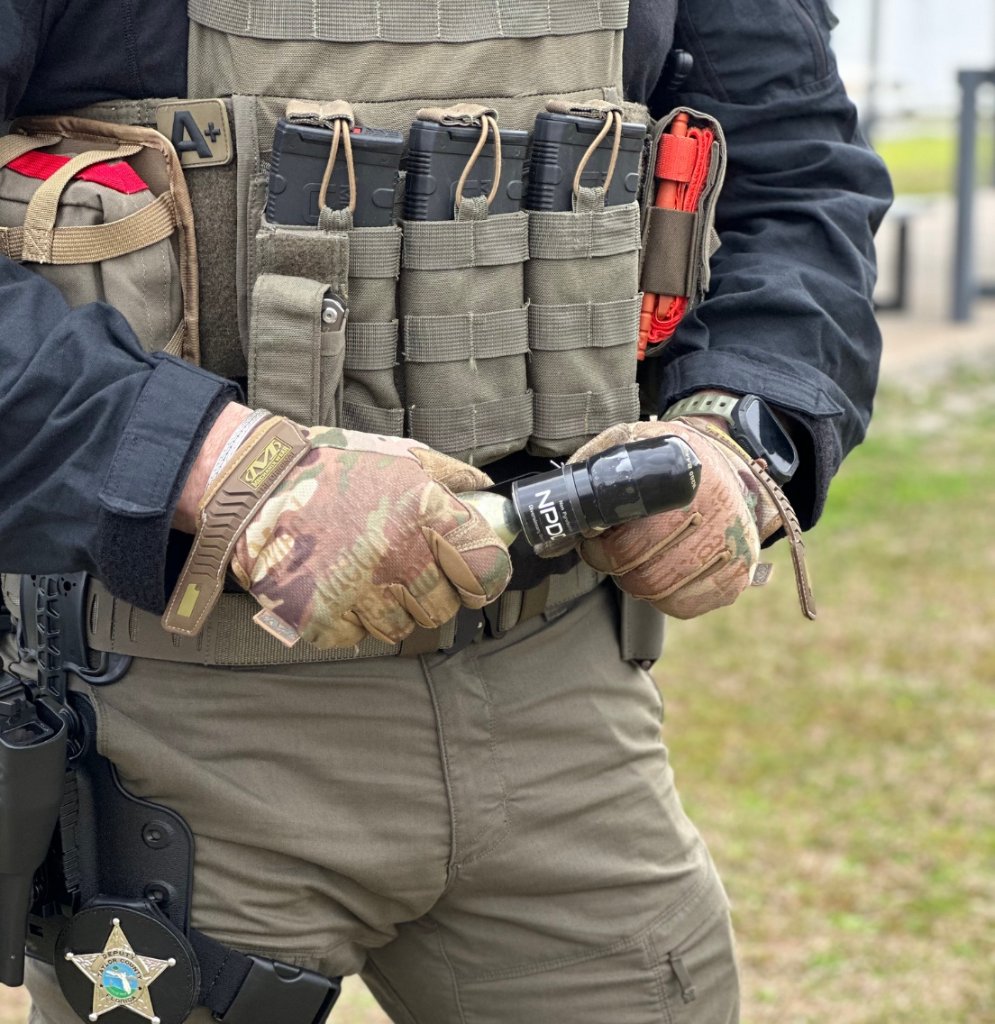
The FBI's annual officer safety report contains a stark number: 90,178 law enforcement officers were assaulted in the line of duty in 2025. That figure, drawn from the Officers Killed and Assaulted in the Line of Duty, 2025 special report released May 11, 2026, represents the highest rate of officer assaults recorded over the past 10 years. The rate works out to 13.8 assaults per 100 officers — a metric that applies to every agency contributing data to the FBI's Uniform Crime Reporting Program.
Felonious Deaths and the Scope of the 2025 Numbers
Beyond assaults, 53 law enforcement officers were feloniously killed in the line of duty in 2025, according to the FBI report. The FBI's Law Enforcement Officers Killed and Assaulted program — known as LEOKA — collects data on both felonious and accidental line-of-duty deaths, making it the federal government's primary instrument for tracking how officers die and how they are injured on the job.
The FBI cautions that LEOKA data should not be directly compared to figures published by other entities, such as the National Law Enforcement Officers Memorial Fund, because differing inclusion criteria mean the datasets count different things. Agencies reading the 2025 numbers should keep that distinction in mind before placing them alongside other published totals.
Under UCR reporting requirements, agencies must report all assaults on officers regardless of whether the officer sustained physical injuries. That requirement shapes the data at its foundation: an assault that leaves no mark still counts. The result is a dataset that captures the full breadth of officer-threat encounters, not merely those producing documented injuries.
How LEOKA Collects and Processes the Data
The FBI's Criminal Justice Information Services Division manages the collection and analysis of LEOKA data. The program operates on what the FBI describes as a three-tier approach: data collection, research, and training. Each tier feeds the next.
Data collection runs through the UCR Program, which serves as the conduit for agency-level submissions. Once collected, LEOKA research staff conduct in-depth analysis of incidents to identify trends and develop lessons learned. Those lessons then move directly into curriculum development. The LEOKA program has been running this cycle for over 40 years, building a longitudinal record that makes year-over-year and decade-level comparisons possible.
The most recent update to the LEOKA data catalog occurred in August 2026, according to the FBI. Preliminary statistics and monthly infographics on officer safety are also available through the FBI's Crime Data Explorer, giving agencies access to trend data between the release of annual special reports.
Officer Safety Awareness Training and Free Agency Presentations
The data LEOKA collects does not stay inside the FBI. The agency uses it to develop and refine Officer Safety Awareness Training, known as OSAT, for partner agencies. Critically, the LEOKA program provides these officer safety awareness presentations at no cost to federal, state, county, city, and tribal law enforcement agencies.
The program's stated aim is to focus on the why behind critical incidents rather than just the what. That framing — understanding the decision chain and environmental factors that led to an assault or killing, not just documenting that one occurred — is what LEOKA's in-depth incident analysis is designed to produce. Curriculum built on that analysis goes back out to agencies through OSAT presentations, closing the loop between data collection and field training.
For smaller agencies without dedicated training divisions, the availability of free LEOKA presentations tied directly to current national data carries practical weight. The 2025 numbers give those presentations immediate context: a 10-year high in assault rates is not an abstraction when agency commanders can map their own submission data against the national figure of 13.8 assaults per 100 officers.
What Agencies Should Do With the 2025 Report
The FBI released the full special report on May 11, 2026. Agencies that want to track data between annual releases can access preliminary statistics and monthly officer safety infographics through the Crime Data Explorer. The LEOKA dataset itself was updated in August 2026, meaning the catalog reflects the most current available figures.
Agencies comparing their own assault rates against the national 13.8-per-100-officers benchmark should account for local reporting practices and UCR submission completeness before drawing conclusions. The FBI's caution about cross-entity comparisons applies internally as well: local context matters when interpreting what a number means operationally.
The 10-year high designation is based on the assault rate, not the raw count alone — a distinction that matters for agencies that have grown or contracted in sworn strength over the past decade. The rate-based metric normalizes for agency size and allows meaningful comparison across the time series LEOKA has built over more than 40 years of continuous data collection.