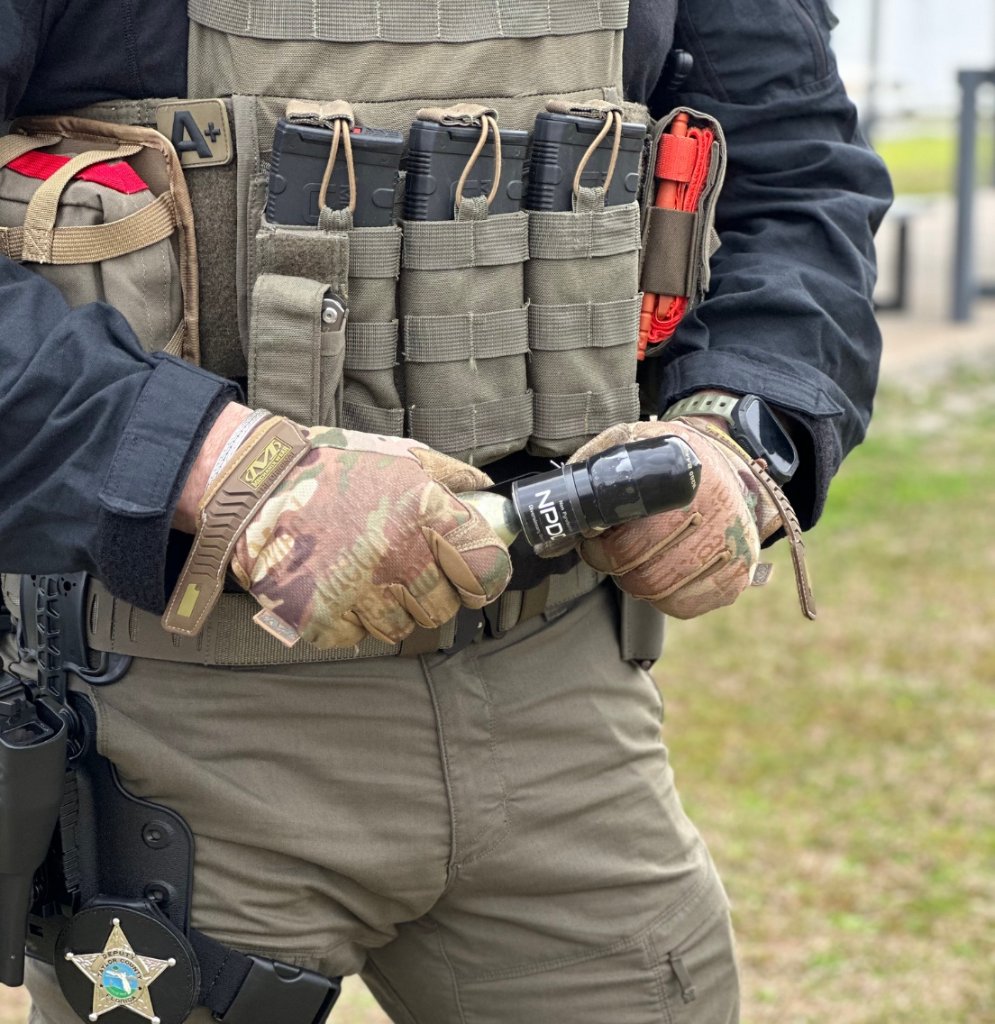
The landscape of federal law enforcement grants is undergoing a fundamental transformation as the 2025-2026 Department of Homeland Security (DHS) appropriations cycle introduces unprecedented strings to municipal funding. For decades, federal grants like the State Homeland Security Program (SHSP) and the Urban Area Security Initiative (UASI) provided a relatively straightforward path for agencies to modernize their tactical inventories. However, the latest legislative language signals a pivot toward high-resolution accountability, specifically targeting the procurement and deployment of less-lethal munitions and crowd control platforms.
Key Details
The current fiscal year appropriations bill includes a provision that requires any agency receiving federal funds for crowd control equipment to maintain a digitized, auditable inventory of all less-lethal assets. This includes a per-round tracking requirement for 40mm impact munitions, PAVA-based projectiles, and chemical irritant canisters. Agencies are now required to submit an annual report to the DHS Office of Civil Rights and Civil Liberties detailing the specific circumstances of any deployment that results in significant injury. Furthermore, the bill allocates specific funds for the development of a national database designed to track the 'life cycle' of less-lethal tools from procurement to disposal or deployment.
Broader Context
This shift reflects a broader national trend toward legislative intervention in tactical operations. Following several high-profile incidents involving the perceived over-deployment of chemical agents in urban environments, federal lawmakers have sought levers to influence local policy without infringing directly on state sovereignty. By tying the 2026 funding to equipment standards and reporting metrics, the federal government is effectively creating a national standard for less-lethal accountability through the power of the purse. This mirrors similar movements in the early 2010s regarding body-worn cameras, where federal incentives paved the way for near-universal adoption.
Implications for Law Enforcement
For command staff, the immediate implication is an increased administrative burden. Procurement officers must now ensure that their inventory management software is capable of meeting federal reporting standards. There is also a strategic risk: agencies that fail to maintain rigorous records may find themselves ineligible for future equipment upgrades, potentially leaving officers with aging or obsolete technology. Additionally, the mandate for detailed deployment reports means that every use of a 40mm launcher or distraction device will be scrutinized at the federal level, necessitating a refinement of department-level after-action reporting protocols to ensure legal and policy compliance.
Conclusion
The 2026 reporting mandate represents a permanent shift in how less-lethal tools are viewed by federal overseers. Rather than being seen as mere tactical consumables, these tools are now treated as high-liability assets requiring the same level of oversight as traditional firearms. Command staff should proactively align their internal tracking systems with these new federal benchmarks to ensure continued access to vital funding streams while reinforcing a culture of transparency within their tactical units.