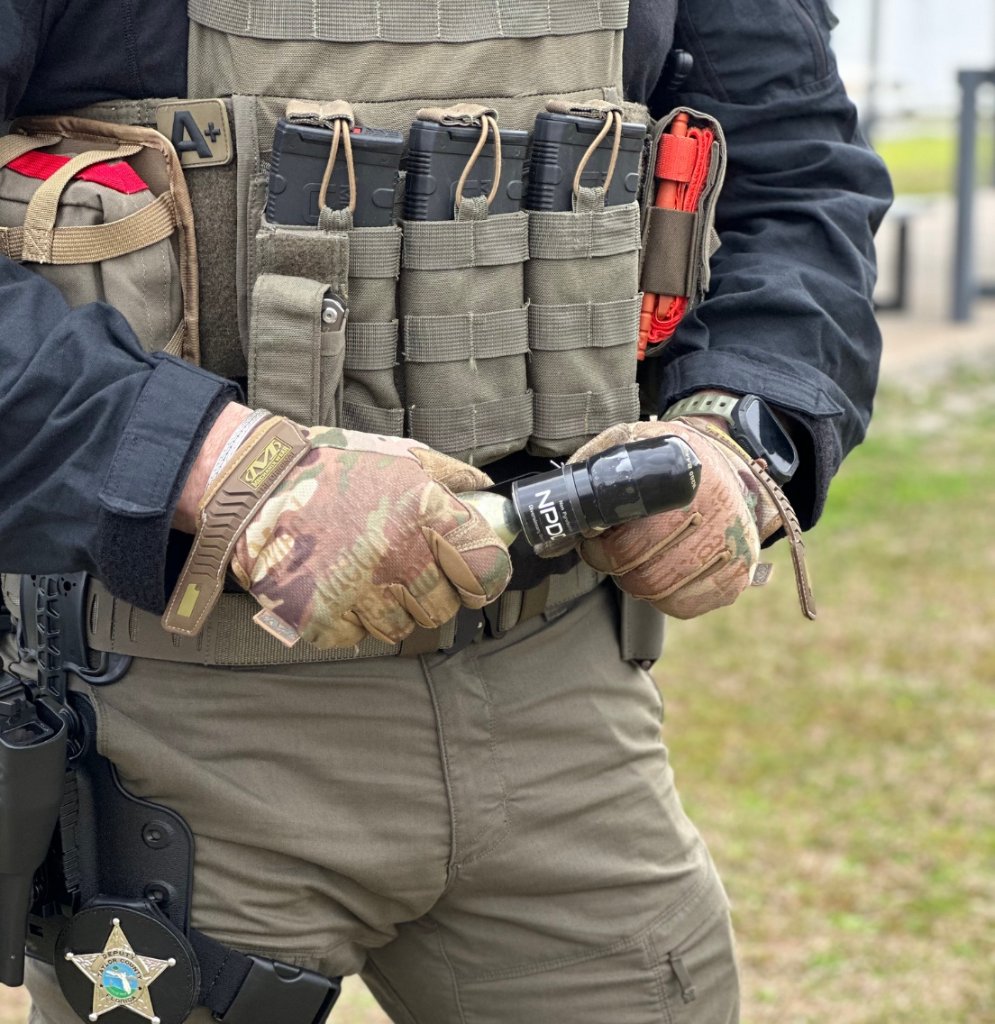
With the final passage of the 2026 DHS Appropriations Bill, federal funding for law enforcement crowd control equipment has entered a new era of oversight. The legislation specifically modifies the criteria for the Urban Area Security Initiative (UASI) and the State Homeland Security Program (SHSP), linking grant disbursements to the adoption of specific less-lethal operational standards. This move signals a strategic pivot at the federal level to modernize agency responses to civil unrest while reducing the long-term liability associated with traditional pyrotechnic devices.
Key Details
The 2026 bill earmarks substantial funds specifically for less-lethal upgrades, but with a significant caveat: agencies must provide proof of updated use-of-force policies that include specific dispersal timelines and de-escalation benchmarks. A major provision in the bill also prioritizes 'cold-gas' or aerosol-based distraction devices over traditional pyrotechnic flashbangs. Furthermore, the bill establishes a federal preference for multi-shot 40mm systems over older 37mm platforms, citing the increased precision and data-logging capabilities of newer launching systems as essential for post-incident review.
Broader Context
This shift in appropriations is the culmination of a multi-year effort to standardize crowd management across the United States. Historically, federal grants were largely used for protective gear and basic munitions. However, high-profile litigation and civil rights reviews from 2023 to 2025 have driven the Department of Justice and DHS to demand more sophisticated equipment that minimizes collateral damage. By tying funding to equipment types like non-pyrotechnic distraction units and impact munitions with higher accuracy ratings, the federal government is effectively setting a national equipment standard without a direct federal mandate.
Implications for Law Enforcement
For command staff and procurement officers, the immediate impact is a need for a comprehensive audit of existing less-lethal inventories. Departments relying on older pyrotechnic distraction devices or uncertified impact rounds may find themselves disqualified from the next cycle of federal grant funding. Additionally, the requirement for policy integration means that procurement and training divisions must work in lockstep to ensure that any new gear is backed by a robust, court-defensible manual that reflects the latest federal guidelines on persistent engagement and crowd dispersal.
Conclusion
The 2026 DHS funding landscape rewards agencies that are proactive in adopting advanced less-lethal technologies. By aligning procurement strategies with the federal preference for non-pyrotechnic systems and high-precision launchers, departments can not only secure necessary resources but also enhance their operational transparency and reduce the risk of litigation in complex crowd management environments.