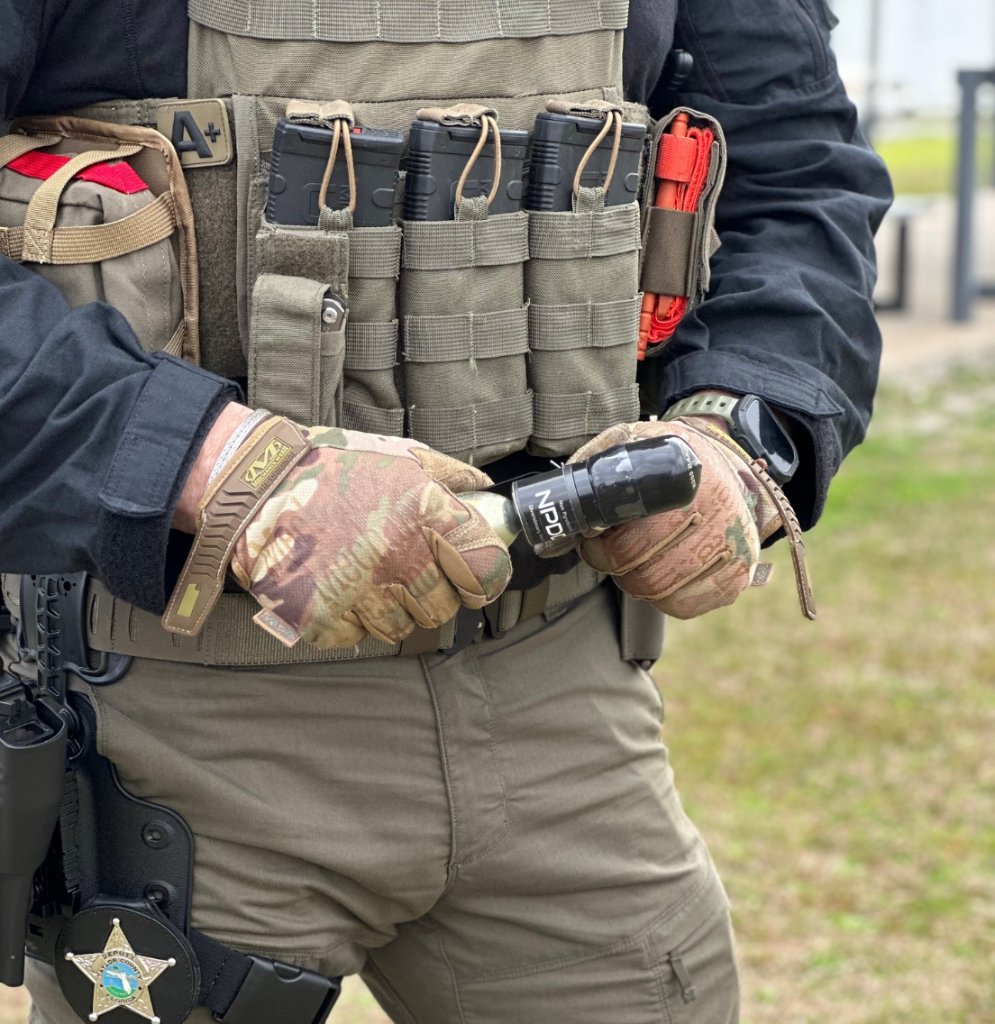
The landscape of tactical crowd management and suspect control has undergone a fundamental shift. For years, the deployment of less-lethal munitions was often viewed through the lens of 'area-denial'—a method to resolve high-stress encounters quickly. However, recent federal 'pattern or practice' investigations have signaled an end to this broad-brush approach. The focus has moved toward precision accountability, where the legal and operational burden now rests on an officer's ability to justify every individual round deployed, even in the midst of chaotic civil unrest.
Key Details
A pivotal catalyst for this shift was the Department of Justice (DOJ) report released in mid-2024 concerning the Phoenix Police Department. The 126-page investigative finding highlighted systemic failures in the application of less-lethal force. Specifically, investigators found that officers routinely deployed kinetic impact munitions against individuals who were already handcuffed or were accused of low-level crimes and posed no immediate physical threat.
Two critical findings from the report now serve as the baseline for modern policy: the unjustified use of projectiles as a primary tool for compliance rather than a secondary measure, and the consistent failure to provide immediate medical aid following an impact. The DOJ noted that less-lethal force was often used to resolve situations 'quickly' at the expense of de-escalation efforts, leading to unnecessary injuries and civil rights violations. These findings have since been echoed in several other federal oversight actions, establishing a clear national trend toward stricter deployment criteria.
Broader Context
This evolution is part of a broader shift in the federal perspective on the 'Force Continuum.' In the wake of the 2020 civil unrest and subsequent legal challenges in cities like Austin and Los Angeles, the judiciary and federal oversight bodies have moved to eliminate 'indiscriminate' force. The Fourth Circuit Court of Appeals has notably reinforced this by establishing a precision mandate. This mandate dictates that the presence of violent actors within a larger, non-violent crowd does not grant law enforcement a blanket authorization for area-saturation munitions.
Historically, 40mm launchers and PAVA-based systems were frequently utilized for dispersal. Under the current standards, these tools are now strictly categorized as 'point-of-aim, point-of-impact' systems that require a specific, identified threat to life or property before discharge. The era of firing into a 'dense center' of a crowd is effectively over from a policy and liability standpoint.
Implications for Law Enforcement
For agency command staff, these developments necessitate an immediate transition in both policy and training curriculum. The standard qualification courses, which traditionally focused on mechanical proficiency and marksmanship, must be replaced with Integrated Tactical Decision Making (ITDM) models.
Operationally, this means implementing 'Identify-Engage-Assess' cycles. Officers must be trained to recognize de-escalation windows even after a less-lethal round has been fired. Furthermore, agencies must integrate mandatory medical response protocols into their use-of-force reporting. The DOJ’s emphasis on 'delayed medical aid' as a civil rights violation suggests that an officer’s responsibility no longer ends with the neutralization of a threat; it extends to the immediate coordination of trauma care for the subject. Failure to document an immediate transition to an 'assessment posture' following deployment is increasingly becoming a primary driver for successful litigation against departments.
Conclusion
The strategic takeaway for law enforcement leadership is clear: proactive policy alignment is the best defense against federal intervention. By adopting precision-engagement standards and mandating rigorous post-impact medical assessments, agencies can maintain the operational utility of less-lethal tools while insulating themselves from the legal pitfalls identified in recent DOJ findings. The goal is no longer just the resolution of an incident, but the constitutional and documented application of force that stands up to the highest levels of federal scrutiny.