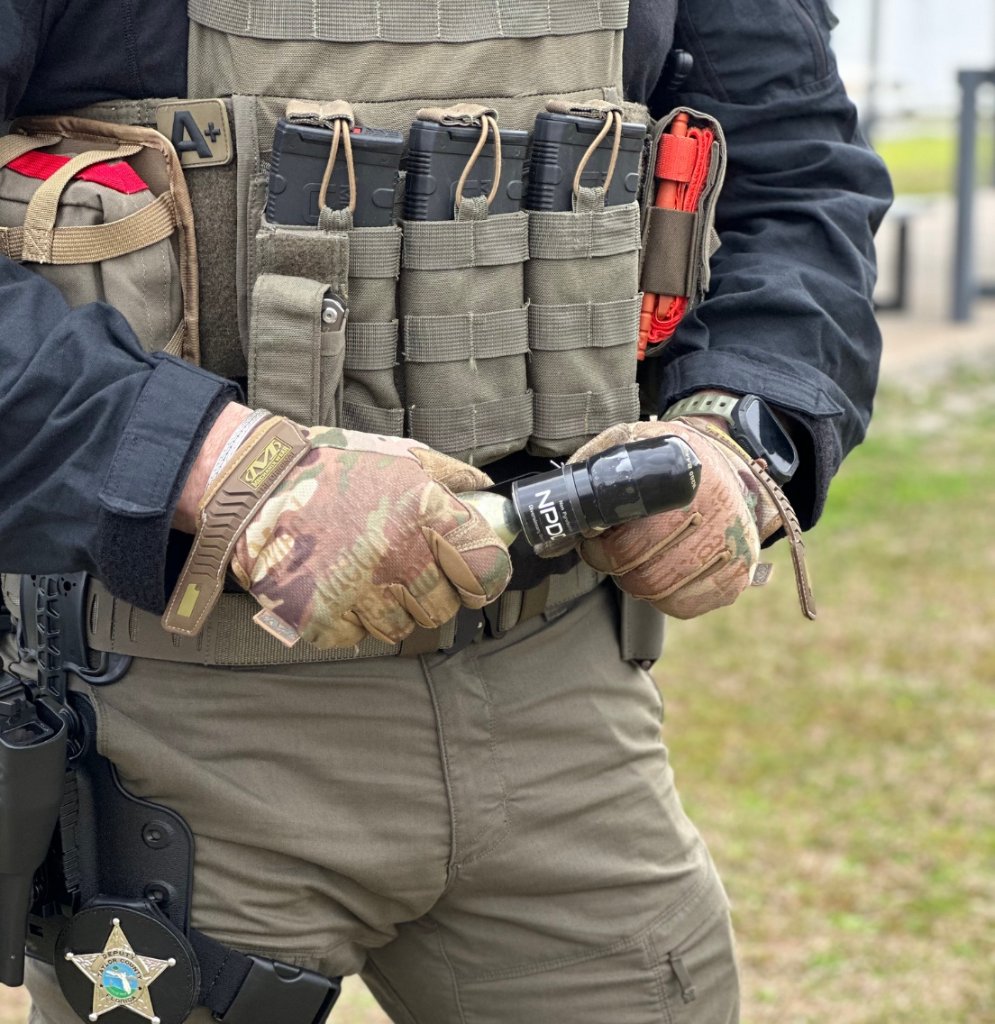
The legal landscape surrounding the use of chemical irritants, specifically PAVA and OC-based delivery systems, has undergone a significant shift following recent appellate court decisions. These rulings have begun to narrow the scope of 'objective reasonableness' when chemical agents are deployed in mixed-crowd environments. The core of the judicial concern lies in the 'indiscriminate' nature of area-saturation tools, which often affect non-compliant individuals and peaceful bystanders simultaneously. This evolution in case law requires a reassessment of how and when these systems are utilized during civil disturbances.
Key Details
Recent rulings have emphasized that the mere presence of a disruptive crowd does not automatically justify the use of chemical munitions. Courts are now requiring a higher threshold of 'immediate threat' from specific individuals before area-saturation tactics can be employed. In one landmark case, an appellate panel ruled that the deployment of OC spray into a crowd where only a small minority was engaging in property damage constituted a violation of the Fourth Amendment for those not actively resisting. The court noted that the 'tactical necessity' of the force must be balanced against the likelihood of affecting innocent parties, placing a new burden of precision on the deploying officers.
Broader Context
This judicial trend reflects a broader push for 'individualized suspicion' even in mass-response scenarios. Historically, law enforcement was granted broad leeway to clear streets once a dispersal order was ignored. However, the introduction of high-volume PAVA delivery systems has changed the math for the judiciary. Because these tools can affect people blocks away from the point of impact, judges are increasingly viewing their use as a 'seizure' of everyone within the plume, necessitating a robust justification for every individual affected—a nearly impossible standard in a riot, but one that is becoming the new legal reality.
Implications for Law Enforcement
The primary implication for law enforcement is the need for more granular target acquisition. Instead of general area saturation, agencies should move toward 'target-specific' less-lethal applications where possible. This requires equipping tactical units with launchers capable of high-precision delivery, such as PAVA-ball systems that can strike a specific agitator without creating a massive secondary plume. Furthermore, body-worn camera footage must be meticulously reviewed to ensure that the deployment of chemical agents was a direct response to an identifiable threat, rather than a generalized tool for crowd movement. Policy manuals must be updated to include specific language regarding the 'bystander risk' and the mitigation strategies required before deployment.
Conclusion
As the courts continue to refine the limits of less-lethal force, the legal defense of 'crowd clearing' is becoming less viable. Command staff must pivot toward a strategy of 'surgical intervention,' using less-lethal tools to extract or neutralize specific threats rather than as a broad-brush solution for non-compliance. By emphasizing precision and documenting the specific threats that necessitate force, agencies can protect their officers from the growing wave of judicial scrutiny and ensure that their use-of-force policies remain aligned with modern constitutional interpretations.