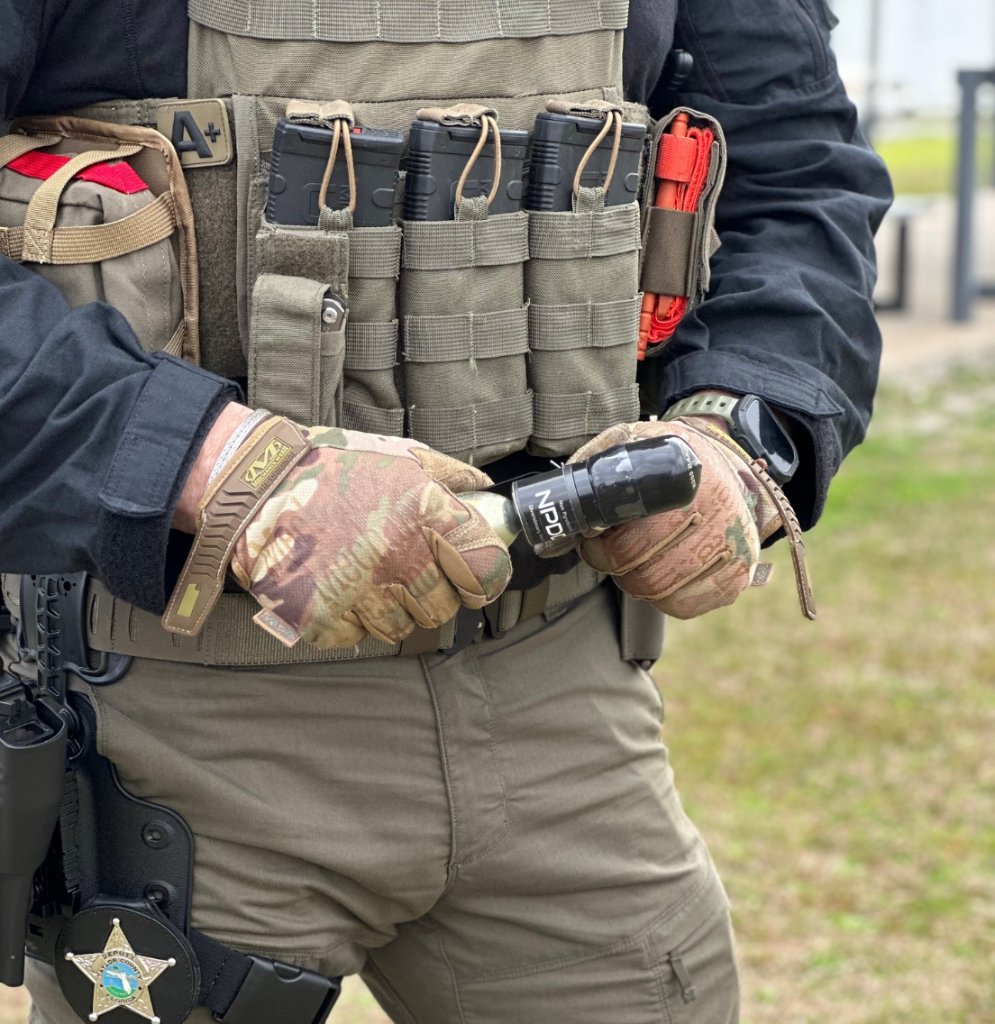
The landscape of crowd management is undergoing a significant tactical shift as legal standards for less-lethal deployment evolve. Traditionally, dispersal operations often relied on area-saturation tools to move large groups. However, a series of recent judicial reviews has signaled that the indiscriminate use of chemical agents or kinetic impact projectiles (KIPs) in a manner that disproportionately affects non-hostile bystanders may constitute an unreasonable use of force. This necessitates a transition toward surgical intervention, where less-lethal tools are deployed with the same level of target discrimination as lethal systems.
Key Details
Recent data from multi-agency training exercises in mid-2026 indicates that agencies are increasingly moving away from high-volume chemical foggers in favor of individual-target munitions. The shift is driven by findings in recent civil litigation where courts have scrutinized the inability of standard dispersal tactics to provide a safe egress for non-violent participants. Current operational directives now emphasize the use of precision-delivered PAVA or OC projectiles to neutralize specific agitators without contaminating the surrounding environment. Furthermore, documented body-worn camera footage is now being used to verify that a specific threat was identified and isolated prior to the deployment of any less-lethal device.
Broader Context
Historically, the force continuum allowed for a broader application of less-lethal tools during declared unlawful assemblies. However, the national landscape has moved toward a more restrictive interpretation of these events. State legislatures and POST boards are now aligning their standards with the principle of proportional response. This trend is mirrored in federal oversight, where the Department of Justice has highlighted the risk of respiratory distress and secondary injuries caused by the over-deployment of chemical munitions in confined urban corridors. As a result, the strategic focus has moved from mass dispersal to targeted extraction and individual compliance.
Implications for Law Enforcement
For command staff, this tactical evolution requires a comprehensive review of both equipment and policy. Tactical teams must be equipped with launchers and munitions capable of high-accuracy engagement at extended ranges to avoid the need for close-quarters area saturation. Furthermore, policy manuals must be updated to include specific language regarding bystander proximity. Officers must be trained to recognize that the presence of a few violent actors does not necessarily justify the use of area-denial tools that affect the entire crowd. Documentation requirements will also increase, as every deployment will now require a specific justification for why a less-lethal round was directed at a particular individual within a crowd.
Conclusion
Modern crowd management requires a balance between maintaining public order and minimizing the risk to non-combatants. The move toward target-specific engagement represents the professionalization of less-lethal tactics, bringing them in line with long-standing firearms standards. By prioritizing precision over volume, agencies can reduce the risk of secondary injuries, mitigate civil liability, and maintain the public trust necessary for effective community policing in the long term.