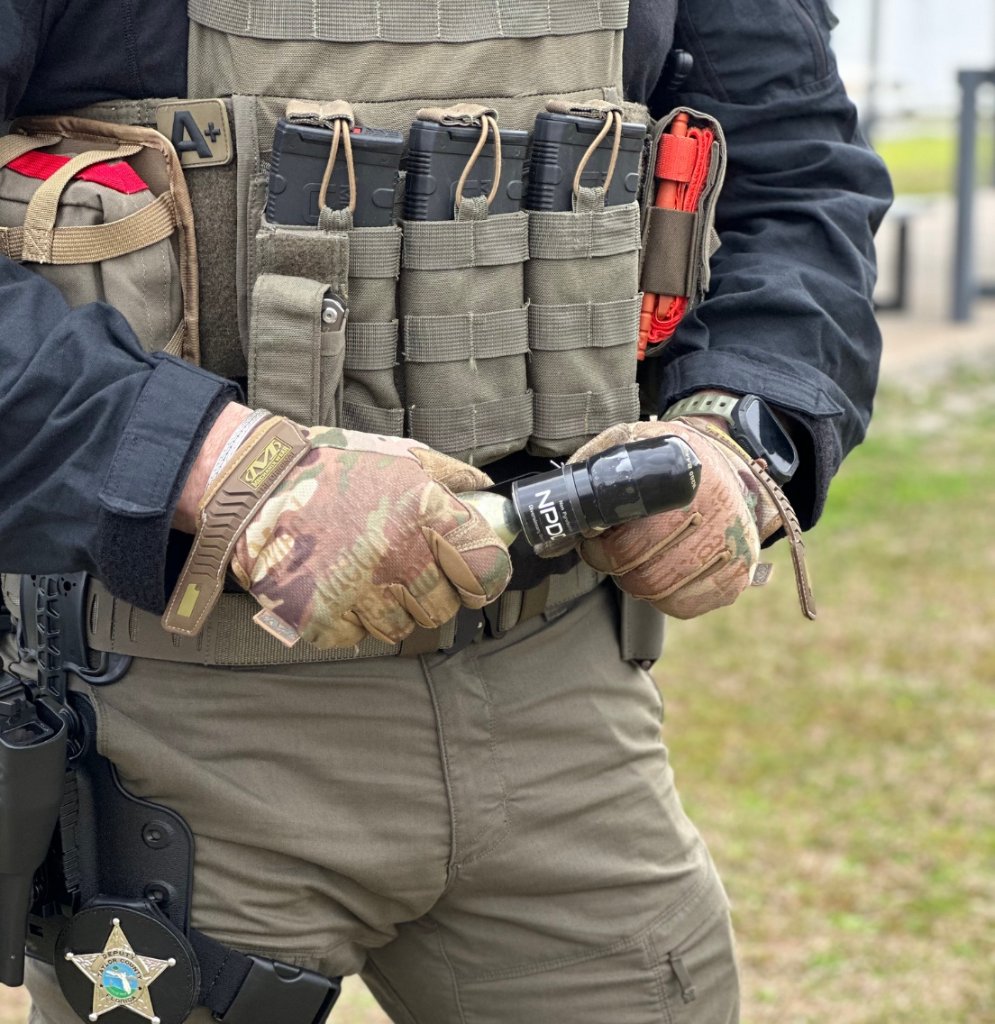
Legislative scrutiny of less-lethal tools has shifted focus from kinetic impact munitions to the atmospheric deployment of chemical irritants. As of June 2026, several state legislatures have moved to restrict the use of broad-spectrum chemical agents, such as CS and large-scale OC foggers, particularly in residential corridors. This legislative trend represents a significant shift in the operational landscape for crowd management, requiring a fundamental reassessment of how agencies approach large-scale civil unrest in urban environments.
Key Details
Recent legislative sessions have seen the passage of bills similar to the newly enacted Senate Bill 412, which prohibits the deployment of area-saturation chemical agents within 500 feet of residential structures during nighttime hours. The bill mandates that any use of chemical irritants must be targeted rather than broad-based, effectively ending the use of high-volume canisters in mixed-use neighborhoods. Furthermore, the legislation introduces a mandatory review process for every deployment, requiring agencies to provide video evidence that the irritant was directed at a specific threat or a small, non-compliant group rather than an entire geographic area. These laws also elevate the reporting requirements, forcing agencies to document the exact concentration levels and the duration of exposure for affected individuals.
Broader Context
This movement is part of a national trend toward high-precision less-lethal deployment. Following years of litigation regarding bystander exposure in high-rise residential areas, policymakers are responding to public safety concerns about air quality and secondary contamination. The trend is moving away from the 1990s-era doctrine of wide-area dispersal toward a 2026 standard of tactical isolation. Many agencies are already proactively transitioning from gas-based systems to PAVA-based projectiles and micro-delivery systems that limit the footprint of the irritant. This legislative pressure is also prompting states to update their POST certification standards, emphasizing the selection of munitions based on environmental factors like wind speed, building density, and humidity levels.
Implications for Law Enforcement
For command staff, these regulations necessitate a revision of standard operating procedures for crowd dispersal. The reliance on broad-spectrum irritants must be replaced with tactical precision. This likely involves increased procurement of PAVA-saturation systems that use pneumatic delivery rather than pyrotechnic combustion, which reduces both fire risk and the likelihood of excessive drift. Additionally, supervisors must be trained to recognize the 'residential threshold,' where the legal standard for deployment becomes significantly higher. Failure to adhere to these new geographic restrictions could lead to both civil liability and state-level decertification of the incident commanders who authorize the deployment.
Conclusion
The era of wide-area chemical saturation is drawing to a close in many jurisdictions. Future crowd management will depend on the ability of agencies to deploy irritants with surgical precision. Strategic planning for 2027 should prioritize the acquisition of multi-shot delivery systems and projectiles designed for minimal drift. By embracing these changes now, agencies can ensure they maintain the ability to disperse violent crowds without running afoul of increasingly restrictive state laws.