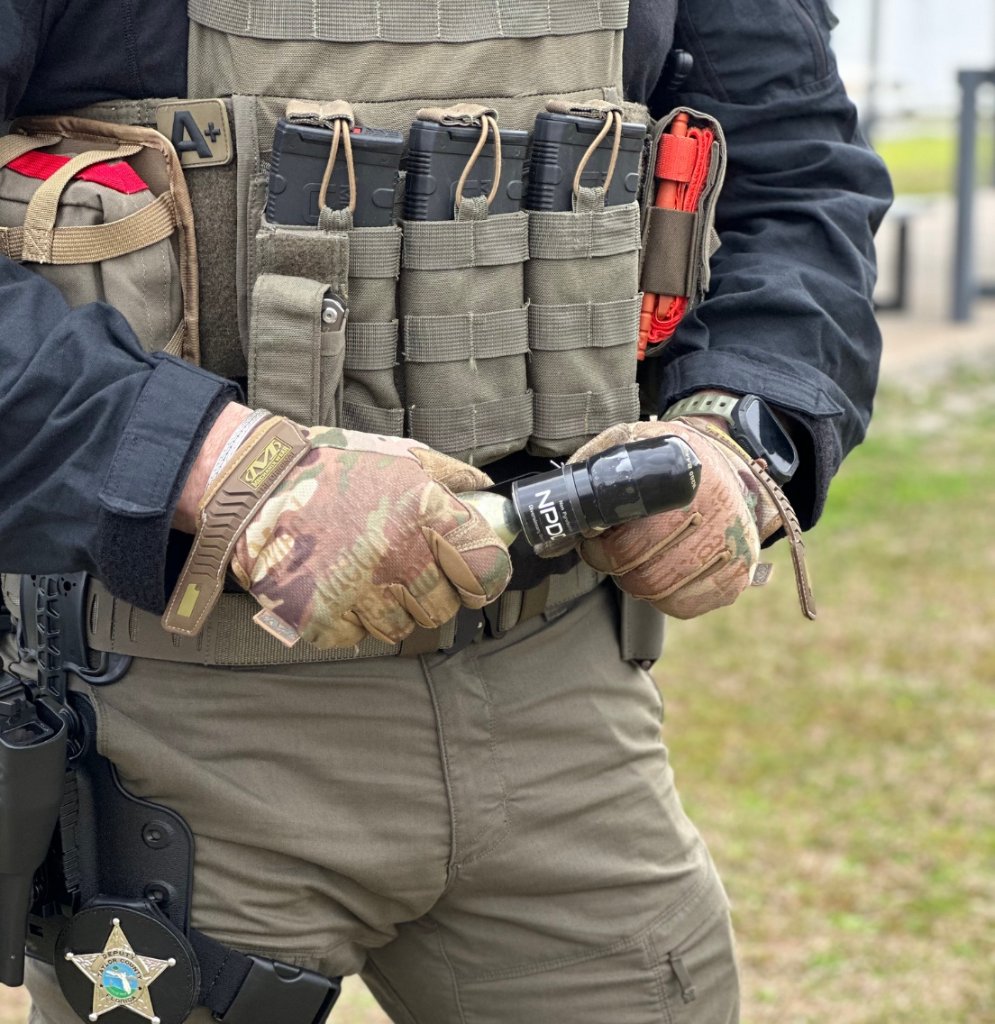
The landscape of crowd management is undergoing a fundamental shift as state legislatures move from outright bans on tools to the regulation of their atmospheric density. Following a series of high-profile litigations in early 2026, four states have recently passed 'Clean Air in Public Assembly' acts. These statutes do not prohibit the use of chemical irritants but instead establish strict limits on the concentration of PAVA and OC that can be present in a given area during a single operational period. This legislative evolution forces law enforcement command staff to view less-lethal deployment through the lens of environmental science and precision engineering.
Key Details
The new statutory frameworks, specifically those recently signed in Oregon and Illinois, introduce the concept of 'Maximum Volumetric Saturation' (MVS). Under these guidelines, agencies must ensure that the total weight of aerosolized chemical agents does not exceed specific gram-per-cubic-meter thresholds. To comply, agencies are now required to document the exact number of rounds fired, the specific chemical payload of each munition, and the estimated volume of the dispersal area. Furthermore, the legislation mandates that 'saturation intervals'—the time allowed for agents to dissipate—must be observed before secondary deployments can occur. Failure to adhere to these density metrics now carries the same legal weight as a violation of use-of-force policy, opening departments to civil liability even if the initial decision to use force was justified.
Broader Context
This trend is the culmination of years of judicial scrutiny regarding the indiscriminate use of chemical agents in dense urban environments. Previously, litigation focused on the 'reasonableness' of the force; today, the focus has narrowed to the 'physiological impact' of the cumulative dose. The 2026 legislative session indicates a national push toward making crowd control munitions quantifiable. This mirrors historical shifts in kinetic force, where the move from lead shot to standardized rubber projectiles was driven by a need for predictable, measurable outcomes. The 'dosage-based' approach to chemical deployment is the next logical step in that progression, treating aerosolized tools as medical-grade irritants rather than simple dispersal mechanisms.
Implications for Law Enforcement
For operational commanders, these laws necessitate a complete redesign of dispersal tactics. Field commanders can no longer rely on 'continuous deployment' to break a line of resistance. Instead, they must implement 'staged dispersal,' where munitions are deployed in measured increments with timed gaps for atmospheric clearing. This requires new training for munitions officers, who must now act as technical specialists capable of calculating deployment volumes on the fly. Additionally, logistics and record-keeping must become more granular. Every canister and projectile must be tracked by lot number and payload weight to ensure that after-action reports can withstand judicial review of MVS compliance. Agencies may need to invest in atmospheric monitoring sensors to provide real-time data during large-scale events to defend their tactical decisions in court.
Conclusion
The era of 'area denial' through overwhelming volume is coming to a close. Strategic success in 2026 and beyond will depend on an agency's ability to achieve dispersal through precision rather than saturation. Command staff should prioritize the acquisition of delivery systems that offer predictable dispersal patterns and invest in officer training that emphasizes the 'dosage' of less-lethal force. By adopting these standards proactively, departments can maintain their capability to manage crowds while insulating themselves from the rising tide of density-based litigation.