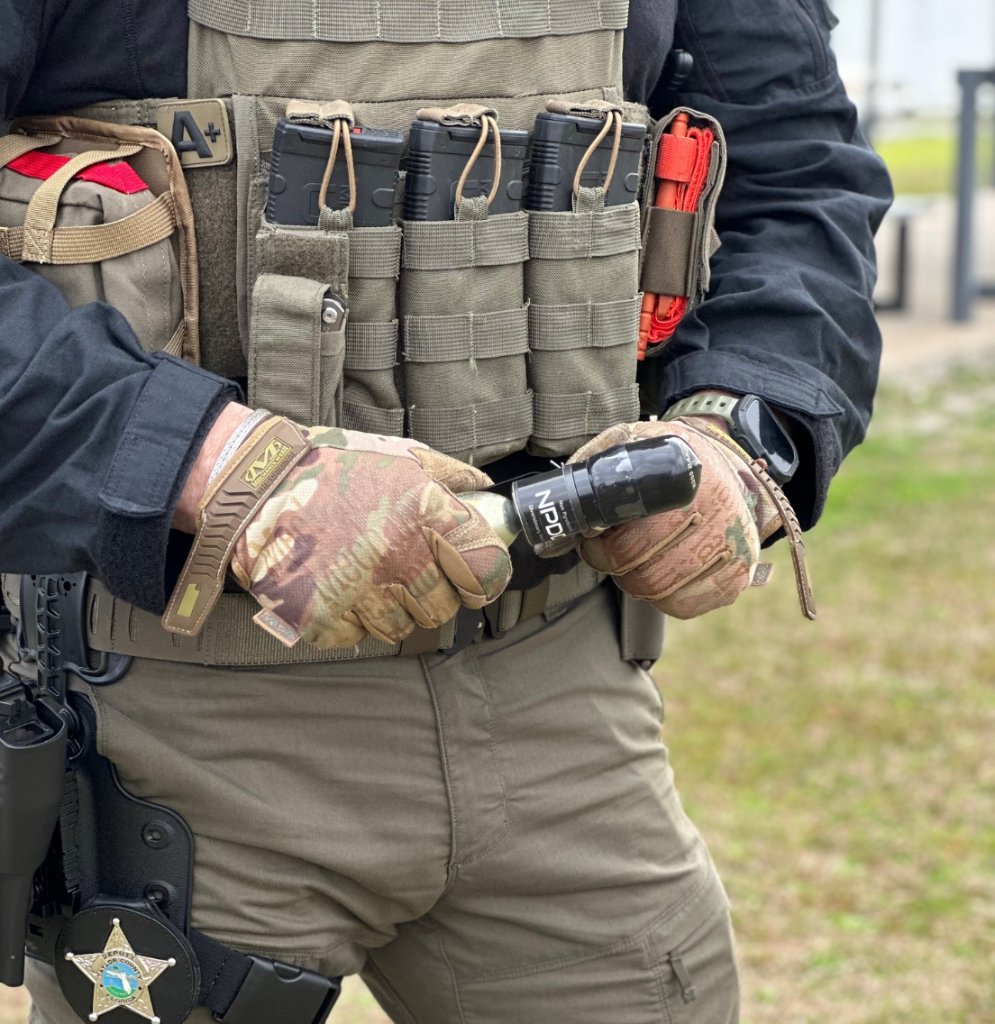
The Ninth Circuit Court of Appeals vacated a preliminary injunction in Dickinson v. Trump, No. 26-1609, on November 20, 2026, lifting restrictions that had governed how federal agents deployed nonlethal munitions near a Portland ICE facility. The decision lands immediately as binding guidance for federal operations within the Ninth Circuit's jurisdiction.
What the Injunction Required — and Why It's Gone
The vacated injunction set a high bar for deployment. Before agents could use tear gas or pepper balls, the order required that a specific, identifiable individual pose an imminent threat of physical harm. That individual-threat standard effectively froze agents in place during crowd situations where threats are diffuse and fast-moving. The Ninth Circuit's decision removes that requirement entirely, according to court records. Federal agents operating near the Portland ICE facility are no longer bound by that pre-deployment threshold.
The court's reasoning, as reflected in the ruling, signals that federal courts remain reluctant to micromanage operational details — including specific tactical deployment protocols and, by extension, decisions such as uniform design. That reluctance is not new, but the ruling makes it explicit in the context of crowd control at a federal facility.
The Partial Dissent and What It Leaves Open
Not every member of the panel agreed fully. A partial dissent in the ruling drew attention to restrictions on aiming nonlethal munitions at the head, neck, and torso. The dissenting portion characterized those restrictions as narrow — but flagged them as likely candidates for future judicial scrutiny. The majority's decision does not resolve that question. Agencies should not read the vacatur as a blanket clearance. The partial dissent is a marker: litigation on targeted-area restrictions may come.
The Ninth Circuit's ruling also does not preclude future cases challenging the specific application of nonlethal munitions in protest environments, court records confirm. The legal questions raised in Dickinson v. Trump are not closed. They are paused.
Operational Impact for Federal Agencies in the Ninth Circuit
The November 20, 2026 decision takes effect immediately for federal operations in the circuit. The removal of the individual-imminent-threat standard gives federal agents broader discretion to deploy crowd control tools when confronting groups near the Portland ICE facility. That is a concrete operational change. It is not a policy change that agencies can sit on.
Command staff are directed by legal advisors to review crowd management policies now, in light of this appellate development. The injunction's vacatur also serves as a reminder that judicial precedents shift — and that operational policy built on a preliminary injunction can collapse when that injunction is overturned. Agencies that structured protocols around the Dickinson injunction's imminent-threat language need to revisit those documents.
Documentation standards do not change with the ruling. Legal experts advise that agencies maintain rigorous records of every use-of-force incident involving crowd control munitions, regardless of the current injunction status. That advice holds whether a court order is in place or not. The absence of an injunction is not a reduced standard for recordkeeping.
Broader Appellate Trends and What Comes Next
The ruling fits a pattern. Appellate courts have increasingly addressed the scope of operational discretion and qualified immunity in high-stakes environments, and the Ninth Circuit's action in Dickinson v. Trump reflects that trend. Courts have shown consistent reluctance to substitute judicial judgment for agency tactical decisions in real-time crowd scenarios.
The tension between protest activity and federal nonlethal munitions deployment has not disappeared. It has moved. The Dickinson case removes one judicial checkpoint, but the legal questions about constitutional limits on crowd control tools remain active. Future plaintiffs may bring narrower claims — focused on the head, neck, and torso targeting question the partial dissent flagged, or on specific deployment incidents rather than blanket restrictions.
For public safety professionals, the clearest takeaway from the November 20, 2026 ruling is procedural: verify the current status of any judicial precedent before writing it into policy. The Dickinson injunction existed, shaped operations, and then was vacated. Agencies that treated a preliminary injunction as settled law learned that preliminary orders are, by definition, temporary. That is not a legal technicality. It is a planning problem.
The case number is 26-1609. The circuit is the Ninth. The date is November 20, 2026. Command staff should have that information in front of them when reviewing crowd management documentation this week.