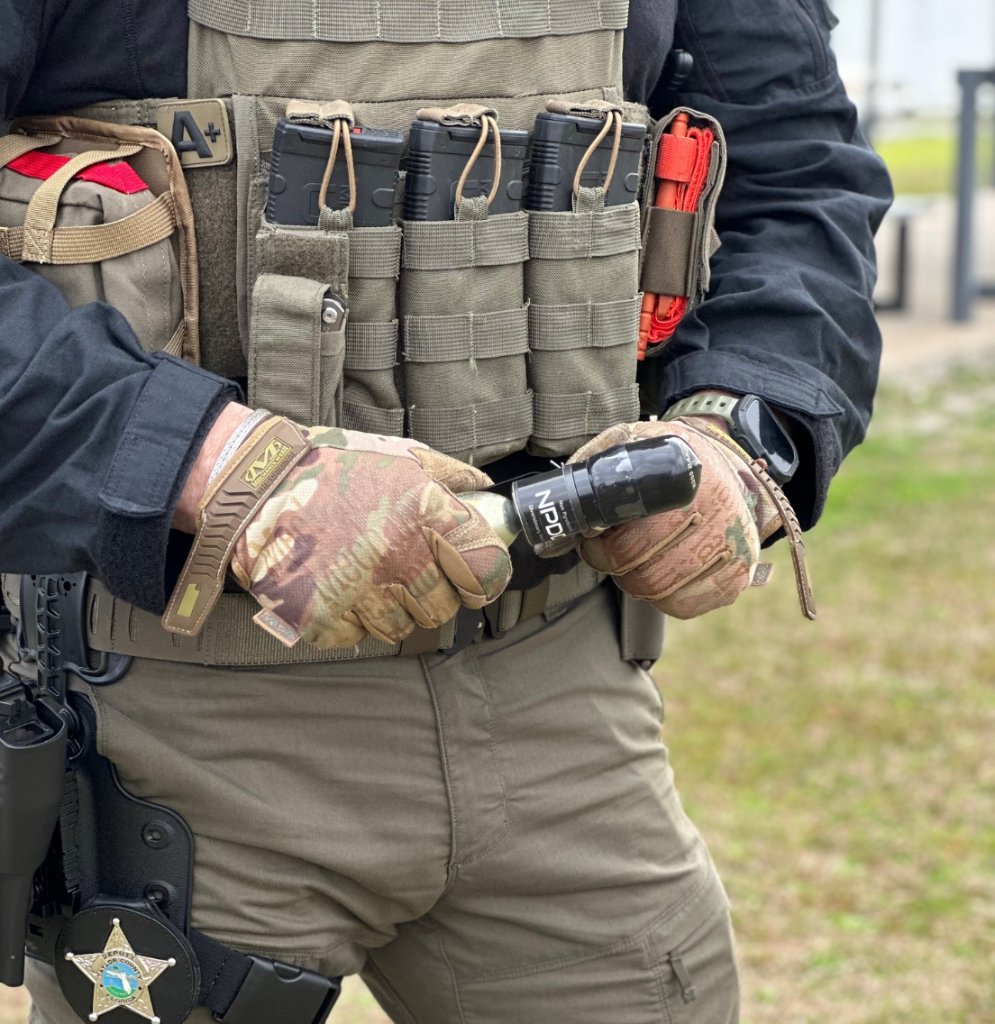
California Governor Gavin Newsom signed Senate Bill 937 on September 29, 2026, making it unlawful for any law enforcement agency in the state to deploy flash-bang grenades to disperse an assembly, protest, or demonstration. The prohibition is categorical — it applies regardless of the size or nature of the gathering. The law also extends to immigration enforcement operations, explicitly banning both flash-bang grenades and explosive breaching charges in that context. That dual restriction places SB 937 at the intersection of two active policy debates: crowd control tactics and the state's posture toward federal immigration enforcement.
The legislation amends Sections 13652 and 13652.1 of the California Penal Code and adds a new Section 13652.2. Those amendments align the restrictions on flash-bang grenades with regulations already in place for other less-lethal weapons, according to the bill text. Kinetic energy projectiles, chemical agents, and flash-bang grenades are now grouped together under a single training requirement: peace officers must receive proper, documented training before deploying any of them in crowd control situations.
Documentation and the DOJ Database
SB 937 does not eliminate every lawful use of flash-bang grenades. When a use is authorized under the law, agencies are required to log it in the California Department of Justice's public use-of-force database. That requirement adds a layer of public accountability that did not previously exist for this category of device. For agency commanders, that means any deployment will be visible in a statewide record that lawmakers, oversight bodies, and the public can access.
The documentation mandate also functions as a compliance mechanism. Agencies cannot quietly deploy the devices and move on. Every authorized use leaves a traceable entry, which changes how supervisors and legal counsel will need to think about incident documentation and after-action reporting.
Training Requirements and Local Agency Obligations
The bill's training requirement has direct operational consequences. Under the language of SB 937, kinetic energy projectiles, flash-bang grenades, and chemical agents may only be deployed by peace officers who have completed proper crowd control training. The bill does not grandfather in officers who have used these devices in the past without formal certification.
The law imposes new duties on local law enforcement agencies, which the bill classifies as a state-mandated local program. That classification has budget implications. When California designates a measure as a state-mandated local program, it triggers a constitutional process under which the state may be required to reimburse local governments for the costs of compliance. Agencies will need to assess what additional training their personnel require and track those costs accordingly.
SB 937 was introduced in the legislature on January 29, 2026. It was amended in the California Senate on May 14, 2026, and again in the California Assembly on June 16, 2026, before reaching the Governor's desk.
Legislative Background and the Broader Signing Package
Senator Lena Gonzalez introduced the bill. Senator Scott Wiener served as a co-author. The legislative intent, as stated in the bill, centers on protecting civil rights and establishing rules for the deployment of tactical equipment. The California Community Foundation was among the proponents, arguing that the bill was necessary to protect communities from military-style tactics during protests.
The legislation follows reported incidents in which stun grenades were used to disperse protests at immigration detention facilities. Those incidents drew criticism from civil rights advocates and contributed to the political momentum behind the bill.
Newsom signed SB 937 as part of a larger package of immigration-related legislation on September 29, 2026. The package, taken together, is part of a series of state-level actions in California designed to counter federal immigration enforcement strategies. The new laws, according to Senator Gonzalez's office, aim to disrupt deportation programs and limit the tactics available to immigration enforcement agencies operating in the state.
For law enforcement agencies in California, SB 937 sets a firm legal boundary. Flash-bang grenades are no longer a lawful option for crowd dispersal. Any agency that continues to use them in that role faces exposure to legal challenge. The documentation requirement and training mandate take effect alongside the prohibition, meaning compliance is not simply a matter of removing devices from deployment kits — it requires updated policy, training records, and reporting infrastructure.