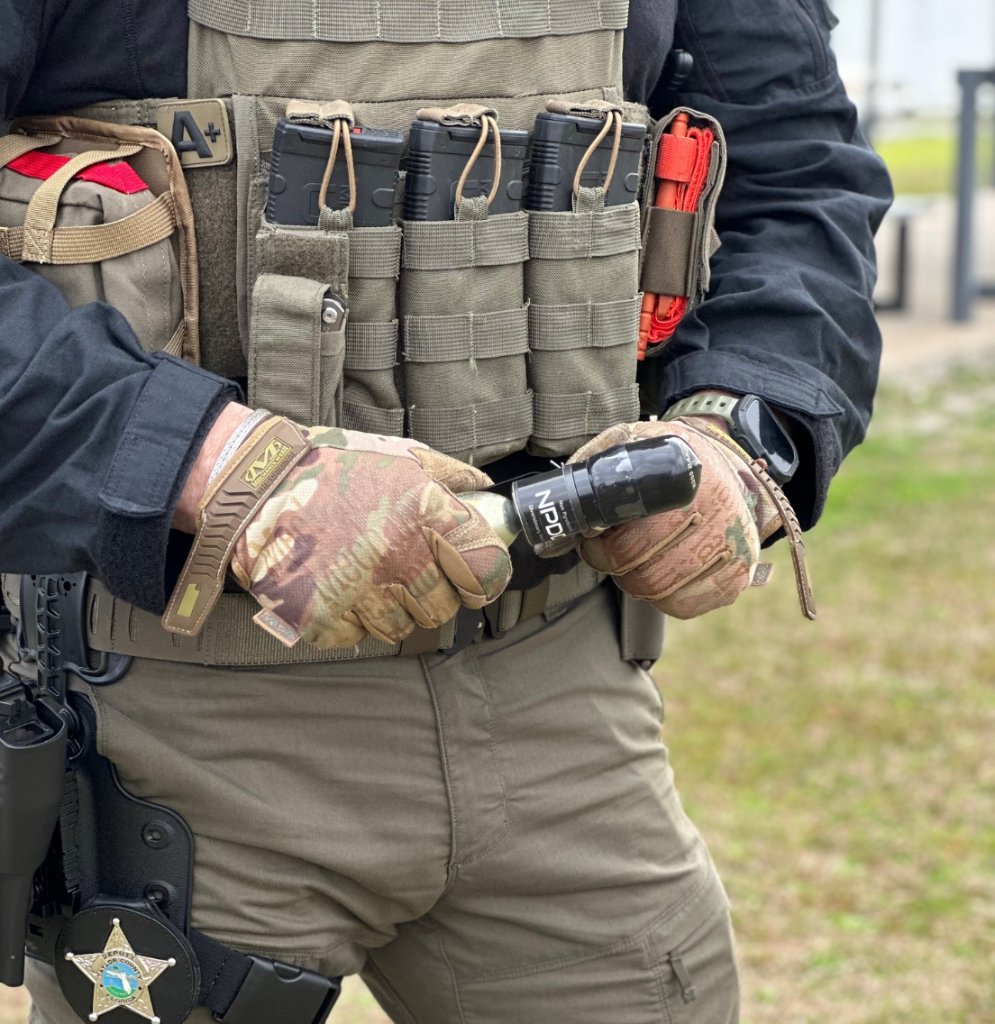
Governor Gavin Newsom signed Senate Bill 937 into law on September 29, 2026. The law is direct: California law enforcement agencies may not use flash-bang grenades to disperse any assembly, protest, or demonstration. Full stop. The prohibition also extends to immigration enforcement operations, where both flash-bang devices and explosive breaching charges are now banned outright.
The bill was introduced in the Senate on January 29, 2026, amended in the Senate on May 14, 2026, and amended again in the California Assembly on June 16, 2026. Senator Lena Gonzalez authored the legislation; Senator Scott Wiener served as co-author.
How the Law Changes the Penal Code
SB 937 amends Sections 13652 and 13652.1 of the California Penal Code and adds a new Section 13652.2. Those existing sections already govern how agencies deploy less-lethal weapons. California law has required for some time that kinetic energy projectiles and chemical agents be deployed only by officers who have completed specific crowd-control training. SB 937 brings flash-bang grenades into that same regulatory structure, aligning their restrictions with the rules already applied to those other weapons categories.
The new Section 13652.2 imposes a documentation requirement. Any use of a flash-bang device that remains authorized under the law must be logged in the California Department of Justice's public use-of-force database. That requirement applies to agencies statewide. Because it creates new duties for local law enforcement, the bill constitutes a state-mandated local program under California law.
The Legislative Record and Who Pushed for It
The California Community Foundation was among the proponents on record. According to the bill's author, Senator Gonzalez, the legislation is intended to safeguard civil rights and establish what supporters described as common-sense rules for tactical equipment. The legislative push followed reports of protests at detention facilities where law enforcement deployed stun grenades for crowd dispersal.
The bill moved through the legislature over roughly eight months, from its January 2026 introduction to the governor's September 29 signature. The timeline included two rounds of amendments — one in each chamber — before it reached Newsom's desk.
The Broader Package of Immigration Bills
Newsom signed SB 937 as part of a larger set of immigration-related legislation, all signed on the same date. Two other bills in that package directly affect law enforcement operations. AB 1807 prohibits immigration agents from using state-owned property. AB 1806 mandates that state prosecutors investigate shootings carried out by federal immigration agents. SB 937 sits alongside those measures as part of what the governor's office presented as a coordinated legislative response on immigration enforcement policy.
For agencies operating near federal immigration enforcement activity, the combination of SB 937 and the companion bills creates a layered set of restrictions. Flash-bangs and explosive breaching charges are off the table for any operation that constitutes immigration enforcement. The documentation mandate for any remaining authorized flash-bang use creates an audit trail visible to the public through the Department of Justice database.
Agencies will need to review their use-of-force policies and equipment authorizations in light of the new Penal Code sections. Any department that has previously listed flash-bang devices as an authorized option for crowd-control or immigration-related operations will need to update those policies. The state-mandated local program designation means compliance is not optional, though the legislation as described does not specify a separate compliance deadline beyond the signing date of September 29, 2026.
The documentation requirement for authorized uses is operationally significant. Submitting flash-bang deployment data to the Department of Justice's public use-of-force database puts that information in the same publicly accessible system that tracks other use-of-force incidents. That visibility is new for this category of device.