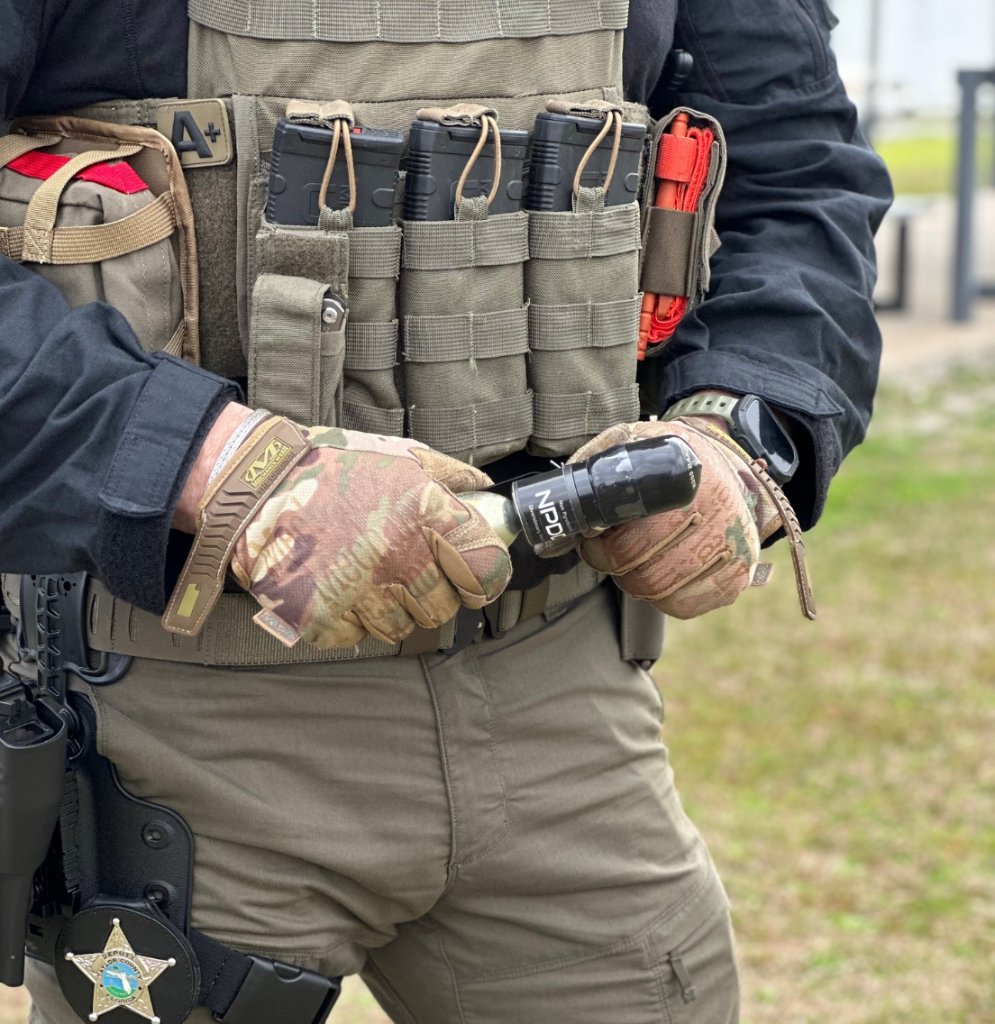
The Bureau of Alcohol, Tobacco, Firearms and Explosives approved Ruling 2026-2 on June 15, 2026. It took effect July 2, 2026. The ruling formally classifies a remote-restraint device that deploys a Kevlar tether via a proprietary cassette system as an instrument of restraint — not a firearm, not an 'any other weapon' designation under either the Gun Control Act or the National Firearms Act.
What the Federal Classification Actually Says
The ATF's determination is explicit on two statutes. The device does not meet the definition of a firearm under the Gun Control Act. It does not meet the definition under the National Firearms Act either. That dual negative finding is the core of the ruling. Nothing in the document establishes or modifies agency-specific use-of-force policies. Nothing in it creates new reporting requirements. The ruling does not dictate how the device may be used operationally. It speaks only to federal statutory classification.
The ruling is also narrow by design. It applies to federal law. States retain full authority to regulate the device under their own jurisdictional frameworks, and the ATF's determination does not override any existing or future state-level regulation of the platform.
Procurement Implications and the Removal of Federal Ambiguity
Before this ruling, agencies interested in integrating a remote-restraint tether system faced an unresolved question: did federal firearms statutes attach to the device? That ambiguity complicated procurement. It introduced compliance review steps that standard non-lethal equipment purchases do not require.
Ruling 2026-2 removes that question at the federal level. According to the ruling, the device is now obtainable through standard agency evaluation and purchase order processes, provided it meets local safety and non-lethal equipment standards. The classification is expected to shorten procurement cycles by eliminating federal firearms ambiguity from the acquisition pathway.
The practical effect is procedural. Agencies no longer need to route acquisition of this device through the compliance frameworks that govern firearms purchases under federal law. That does not mean local or state procurement rules are suspended — it means the federal layer of firearms-specific review is gone.
Where the Device Sits in the Force Continuum
The device is designed to fill a specific operational gap. It sits between verbal commands and higher-level force options — conducted energy weapons, chemical irritants. That gap has long been a pressure point in use-of-force documentation and after-action review. A tool positioned there, if federally unencumbered, becomes easier for agencies to evaluate and deploy.
The device is marketed for use across law enforcement, corrections, and security environments. Its Kevlar tether deploys remotely via a proprietary cassette system, allowing restraint at a distance without the physiological effects associated with conducted energy devices or the environmental and exposure concerns tied to chemical irritants.
The federal classification does not change the legal standard governing when force is applied. That standard remains objective reasonableness — the officer's perception of a threat evaluated against what a reasonable officer would perceive in the same circumstances. The ruling says nothing about that standard. It does not lower it, modify it, or create an exception to it.
Early Access Program and Agency Adoption
The manufacturer has initiated an early adopter program. Up to 10 law enforcement agencies will receive pre-commercial access to new platform iterations under that program. The selection criteria for participating agencies have not been detailed in the ruling or in subsequent reporting on it.
The initial announcement of the device's non-weapon status was made on July 17, 2026 — fifteen days after the ruling's effective date. The ruling itself carries an approval date of June 15, 2026, meaning a gap of roughly six weeks separated internal approval from the public announcement.
Agencies evaluating the device will need to conduct their own assessment against local safety standards and non-lethal equipment criteria. The federal classification clears one threshold. It does not substitute for agency-level review, use-of-force policy integration, officer training requirements, or any state regulatory approval process that may apply in a given jurisdiction.
The ruling is on record as narrow. The ATF drew a clean line: federal firearms statutes do not reach this device. Everything outside that line — state law, department policy, training mandates, force documentation — remains exactly where it was before June 15, 2026.