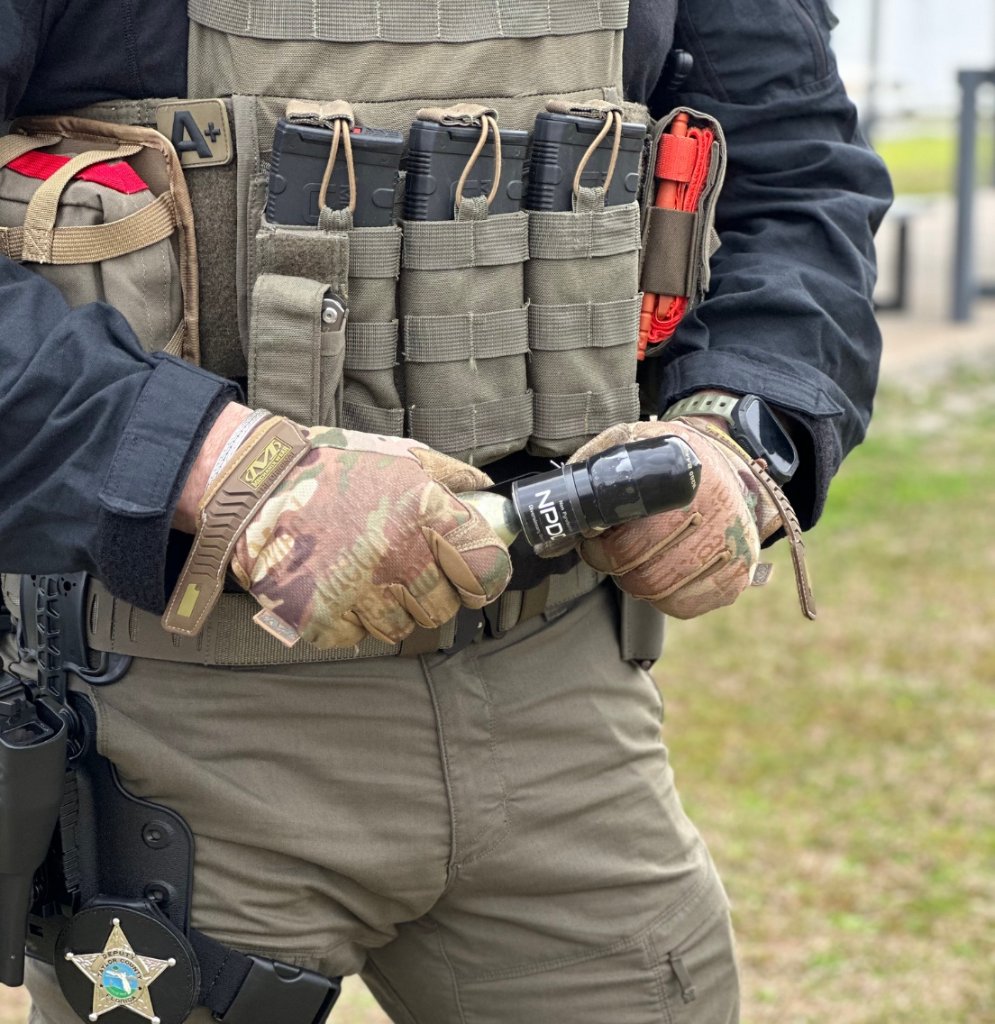
As of early 2026, several state legislatures have moved to restrict how and when law enforcement agencies can display less-lethal munitions during public demonstrations. The emerging legislative trend focuses on the concept of 'visual deterrence' and whether the overt staging of high-capacity launchers inadvertently escalates tension within a crowd. Unlike previous reforms that primarily addressed the deployment criteria for impact munitions or chemical agents, these new statutes require agencies to provide a written justification for even bringing such tools into the line of sight of demonstrators.
Key Details
Recent legislative sessions in multiple jurisdictions have introduced bills requiring that less-lethal launchers remain in secure vehicles or out of public view unless a specific threshold of violence is met. These laws often include requirements for real-time reporting to civilian oversight boards whenever a specialized crowd control unit is deployed with visible launchers. Furthermore, the 2025-2026 state-level reports indicate that agencies must now maintain granular logs of which munitions were staged, even if they were never fired, to ensure that the volume of equipment present was proportionate to the documented threat level.
Broader Context
This movement stems from a series of 2024 and 2025 civil litigations where plaintiffs argued that the 'militarized' appearance of officers equipped with multi-shot launchers and gas masks served as a catalyst for unrest rather than a deterrent. Historically, the presence of less-lethal options was considered a standard de-escalation tool, providing a gap between verbal commands and physical force. However, current judicial and legislative sentiments are shifting toward a 'least-visible-means' standard, where the presence of specialized equipment is treated with the same scrutiny as the use of the equipment itself.
Implications for Law Enforcement
For command staff, these mandates require a significant shift in tactical planning. Incident commanders must now balance the need for immediate access to less-lethal tools with the legal and political risk of 'pre-staging' them. This may necessitate the development of rapid-retrieval protocols or the use of more discreet carrying systems. Agencies are also encouraged to update their internal policies to include a 'staging justification' section in their after-action reports, providing a clear narrative of why specific less-lethal platforms were brought to the front lines during an event.
Conclusion
The regulation of less-lethal tools is no longer limited to the moment of trigger pull. Command staff must recognize that the mere presence of these systems is now a regulated event in many jurisdictions. Strategic success in crowd management will increasingly depend on the ability to deploy these tools rapidly from a concealed position, rather than relying on visible staging as a deterrent. Proactive documentation and transparent policy updates are essential to navigate this new landscape of visual accountability.