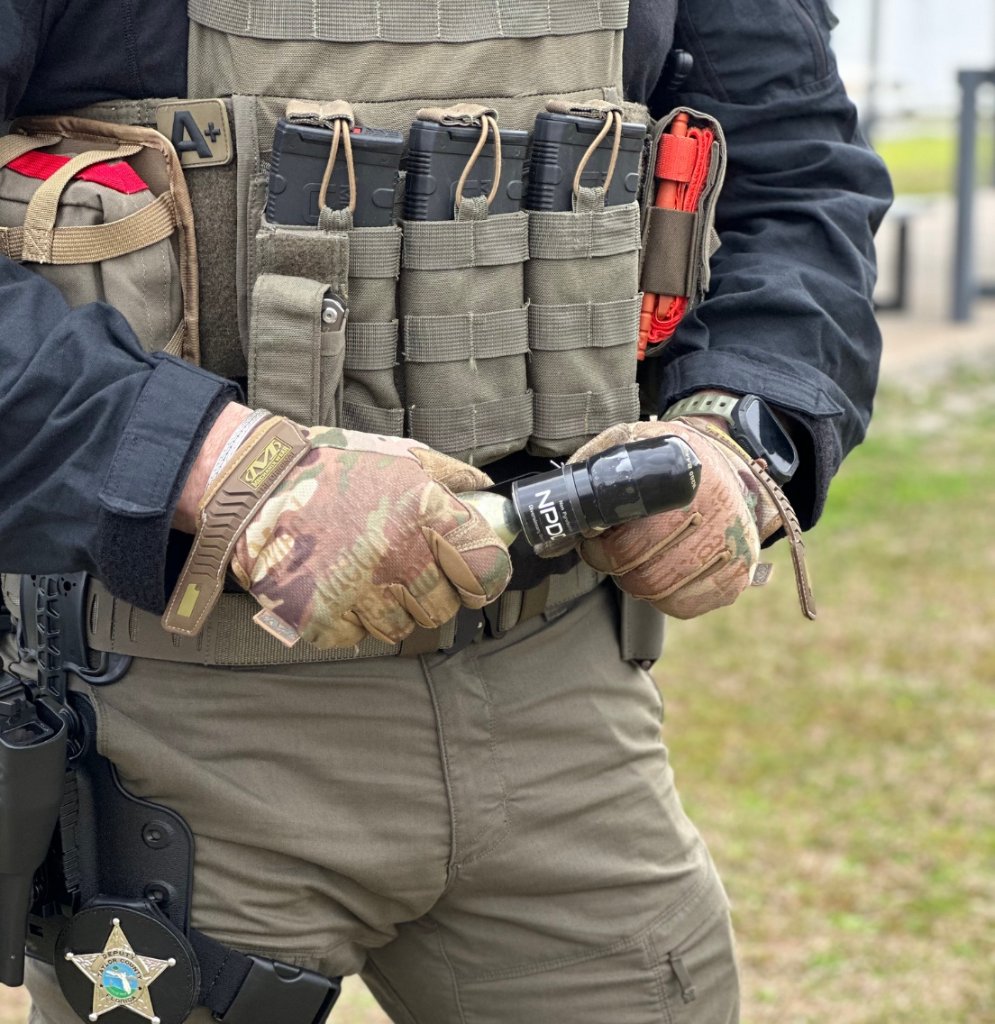
A series of rulings from federal appellate courts this month has brought renewed scrutiny to the deployment of kinetic impact projectiles (KIPs), such as foam rounds and bean bag munitions. These decisions are refining the 'objectively reasonable' standard established in Graham v. Connor, specifically applying it to the context of crowd management. The core of the judicial concern rests on the distinction between dispersing a crowd and neutralizing a specific threat, with the courts increasingly ruling that the former does not always justify the use of impact munitions.
Key Details
The most recent rulings emphasize that the use of KIPs must be 'target-specific.' The courts found that firing into a crowd in a general attempt to move people—without a specific, articulable threat of physical harm from the individuals being struck—may constitute a violation of the Fourth Amendment. Furthermore, the judiciary is now looking closely at 'point-of-aim' vs. 'point-of-impact' data during litigation. If an agency's equipment or training does not reasonably ensure that a projectile will hit the intended zone (typically the lower extremities), the courts are becoming more likely to view the deployment as inherently unreasonable due to the risk of serious head or neck injury.
Broader Context
This judicial trend follows several years of civil litigation where plaintiffs argued that less-lethal rounds were used as a tool of pain compliance against passive protesters rather than as a defensive measure against violent actors. The shift in the courts mirrors changes in the National Institute of Justice (NIJ) certifications, which are becoming more stringent regarding the accuracy and consistency of less-lethal rounds. There is also a growing consensus among law enforcement oversight bodies that the 'less-lethal' label has sometimes led to a lower psychological threshold for deployment, a trend the judiciary is now actively working to reverse through case law.
Implications for Law Enforcement
For operational command, these rulings mean that 'skips' or 'indirect' firing techniques for impact rounds are becoming legally indefensible in many jurisdictions. Training programs must be updated to emphasize high-precision targeting and the necessity of documenting the specific threat posed by an individual before a round is fired. Agencies must also ensure their body-worn camera (BWC) policies and footage reviews are specifically geared toward capturing the immediate actions of the suspect prior to less-lethal deployment. The risk of personal liability for officers and municipal liability for departments increases significantly if KIPs are used as a general crowd-moving tool.
Conclusion
Commanders must move away from the concept of KIPs as mass dispersal tools. The legal standard has shifted decisively toward individual accountability for every round fired. Future tactical success will depend on a combination of highly trained precision marksmen and a policy framework that restricts the use of impact munitions to the neutralization of specific, violent threats. As judicial scrutiny intensifies, the documentation of threat assessment prior to any less-lethal discharge will be the most critical factor in defending use-of-force decisions in court.