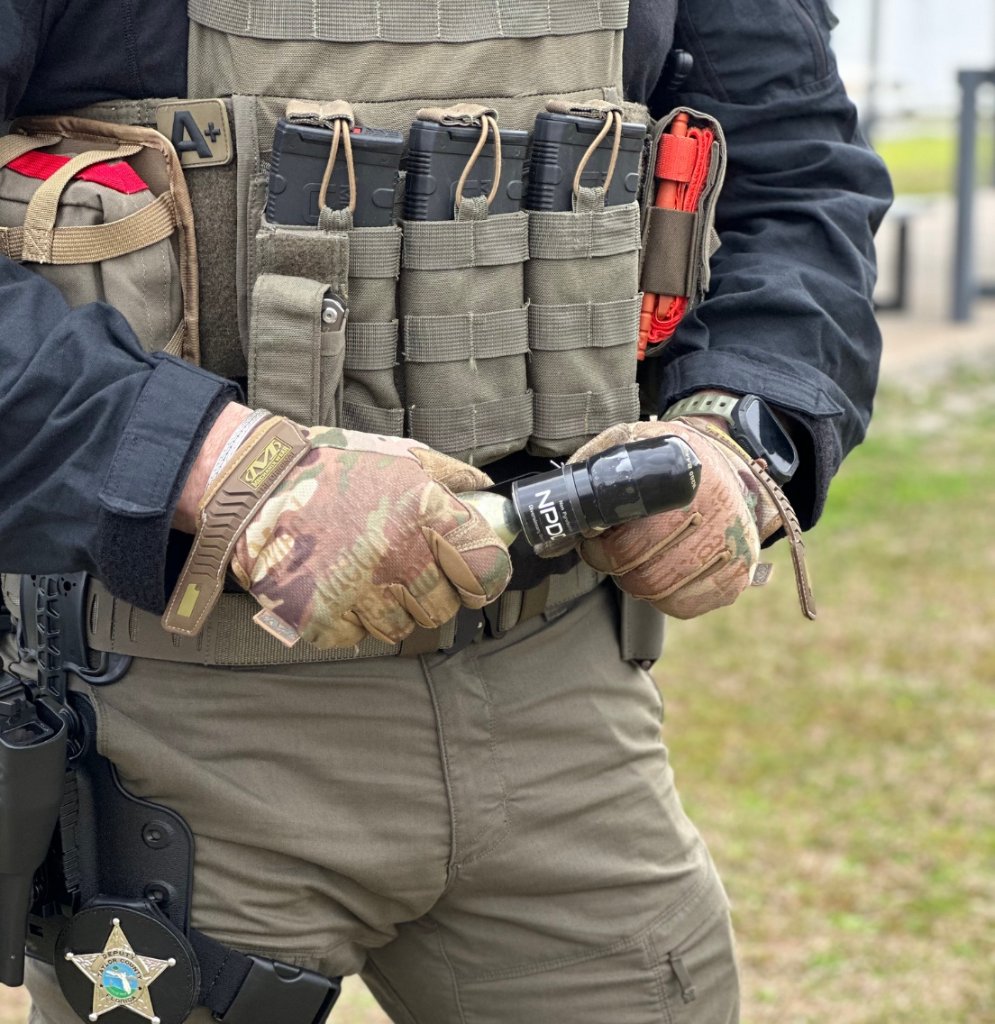
The second quarter of 2026 has marked a definitive shift in how law enforcement agencies at both the federal and state levels approach the acquisition of less-lethal systems. Driven by a combination of updated Department of Justice (DOJ) use-of-force policies and new National Institute of Justice (NIJ) safety standards, procurement officers are moving away from legacy systems in favor of precision-guided and non-pyrotechnic alternatives. This fiscal surge is not merely a replenishment of existing stock but a strategic overhaul of the less-lethal arsenal designed to meet modern accountability standards.
Key Details
Recent solicitations from major federal components underscore this transition. In May 2026, U.S. Customs and Border Protection (CBP) issued a significant requirement for Less Lethal Specialty Munitions (LLSM), specifically targeting distraction devices, specialty impact rounds, and area saturation munitions for 40mm platforms. Simultaneously, the DOJ’s Bureau of Prisons initiated a Procurement of Less Lethal Tactical Operations to bolster tactical response capabilities within federal correctional facilities.
At the state level, the Illinois Criminal Justice Information Authority (ICJIA) announced a $5 million grant opportunity for less-lethal devices and associated training. This program, which saw its initial phase close in June 2026, has already facilitated the distribution of thousands of conducted energy device packages and provided de-escalation training to over 1,700 personnel, according to the ICJIA Less Lethal Alternatives Grant status reports.
Broader Context
This procurement wave is grounded in a broader federal effort to standardize less-lethal technology and minimize collateral injury. The NIJ has been actively seeking new or improved less-lethal technology devices that minimize the risk of death and injury to both officers and the public. This research focus is now manifesting in contract requirements that prioritize energy dissipation and payload accuracy.
Furthermore, the Congressional Research Service has highlighted the increasing operational utility of kinetic less-lethal weapons in crowd control scenarios, prompting a push for clearer federal definitions and more robust usage data collection. The shift is also reflected in legislative efforts like H.R. 4242, which aims to incentivize the adoption of innovative less-lethal projectile devices through tax exemptions, further signaling a government-wide push for these technologies.
Implications for Law Enforcement
For command staff, these trends indicate a move toward Lowest Price Technically Acceptable (LPTA) procurement models that do not sacrifice safety for cost. The integration of training mandates into funding—such as the ICJIA’s requirement for de-escalation and specialized awareness training—suggests that equipment acquisition is now inextricably linked to officer proficiency and policy compliance.
Agencies should anticipate that future federal grants will likely require proof of scenario-based training and rigorous maintenance protocols for 40mm and 37mm launcher systems. There is also a clear preference emerging for non-pyrotechnic distraction devices and precision-impact munitions that reduce the fire risk and respiratory distress associated with traditional chemical agents and flashbangs.
Conclusion
The current fiscal environment presents a unique opportunity for agencies to modernize their less-lethal capabilities. By aligning procurement strategies with the emerging federal standards for non-pyrotechnic distraction and precision impact munitions, departments can enhance officer safety while mitigating the legal and physical risks associated with traditional crowd control measures. Command staff must prioritize systems that offer both tactical versatility and high levels of quantifiable accountability to ensure long-term program viability.