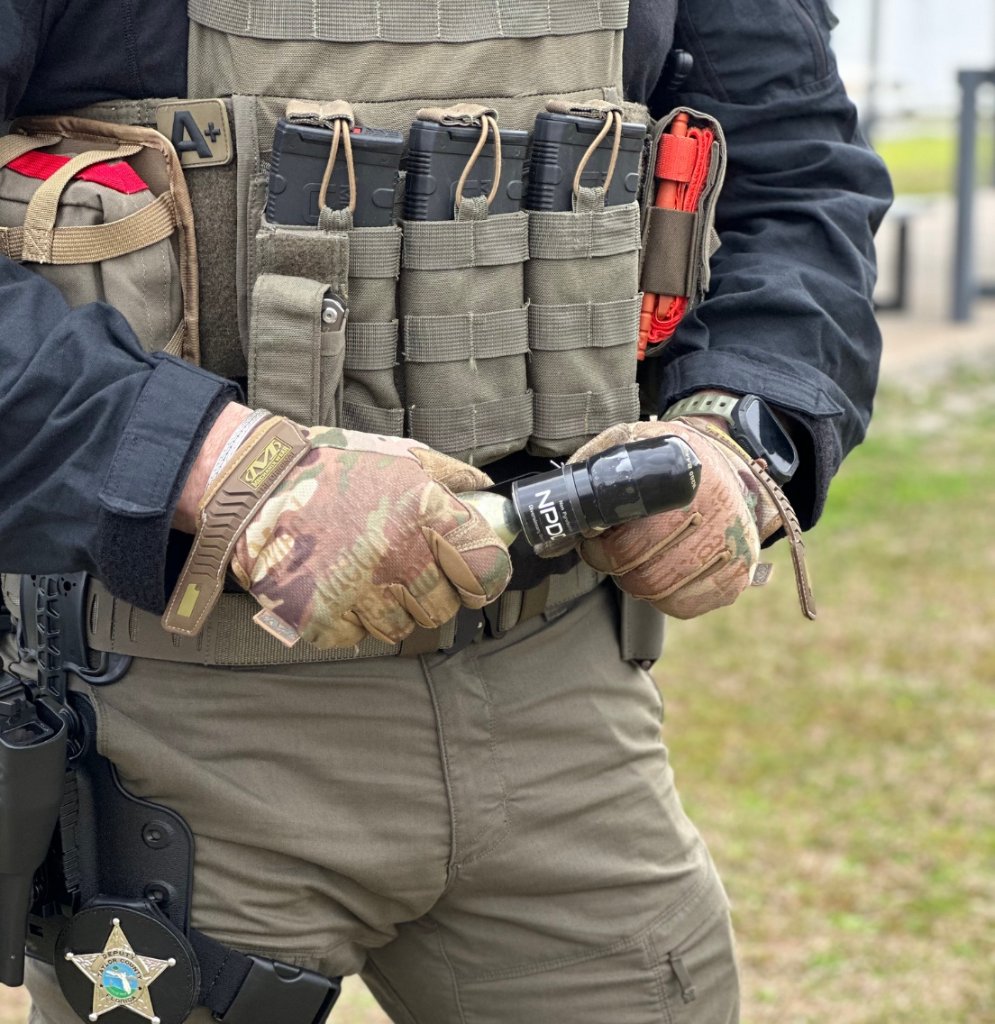
The landscape of federal financial assistance for law enforcement is undergoing a pivotal transformation as the 2026 DHS Appropriations Act takes effect. For the first time, federal grant programs including the Urban Area Security Initiative and the State Homeland Security Program have embedded specific prerequisites regarding the acquisition of less-lethal systems. This policy shift moves beyond simple equipment procurement, requiring agencies to demonstrate comprehensive administrative frameworks before funds are released for chemical irritants, kinetic impact projectiles, or advanced launching platforms.
Key Details
The new federal mandates focus on three primary pillars: policy transparency, deployment reporting, and proportionality training. Under the current cycle, agencies applying for funds to purchase less-lethal launchers—specifically 40mm rifled systems and multi-shot platforms—must submit their internal use-of-force policies for federal review. These policies must align with the latest Department of Justice guidelines on crowd management and dispersal. Furthermore, the act establishes a centralized database for less-lethal deployments, requiring grant recipients to log every instance where a kinetic impact projectile or chemical agent was utilized during a public assembly. Failure to provide accurate, timely data can lead to a suspension of funding for subsequent fiscal years.
Broader Context
Historically, federal grants were largely focused on the technological capabilities of equipment. However, the legislative focus has shifted toward the life cycle of these tools and the legal frameworks surrounding their use. This change follows several high-profile appellate court rulings in 2025 that questioned the 'blanket dispersal' tactics used in urban environments. Legislators are now using the power of the purse to ensure that local agencies are not only equipped with modern less-lethal options but are also utilizing them within a clearly defined, constitutionally sound structure. This mirrors similar movements at the state level where legislatures in at least twelve states have passed laws restricting the use of certain chemical agents unless specific de-escalation benchmarks have been documented.
Implications for Law Enforcement
For command staff, these changes necessitate an immediate audit of internal data collection methods. The transition to these new standards requires a robust administrative process to track 'rounds fired' versus 'rounds issued,' a level of granularity that many smaller agencies currently lack. Beyond administrative overhead, the link between funding and training standards means that tactical units must integrate federal de-escalation mandates into their qualification courses. Agencies that rely heavily on federal funding for their specialized units will need to prioritize the update of their Standard Operating Procedures to reflect the language of the 2026 Appropriations Act, ensuring that their definitions of 'active resistance' and 'imminent threat' match the stringent federal criteria.
Conclusion
The federal government’s role in shaping local less-lethal deployment is expanding through targeted financial oversight. By mandating data transparency and policy alignment as conditions for grant eligibility, the DHS is effectively creating a national standard for crowd control equipment and its application. Command staff must view this not merely as a hurdle for procurement, but as an opportunity to modernize their agency’s accountability frameworks. Proactive alignment with these federal standards will ensure continued access to critical public safety funds while strengthening the legal defensibility of less-lethal deployments in the field.