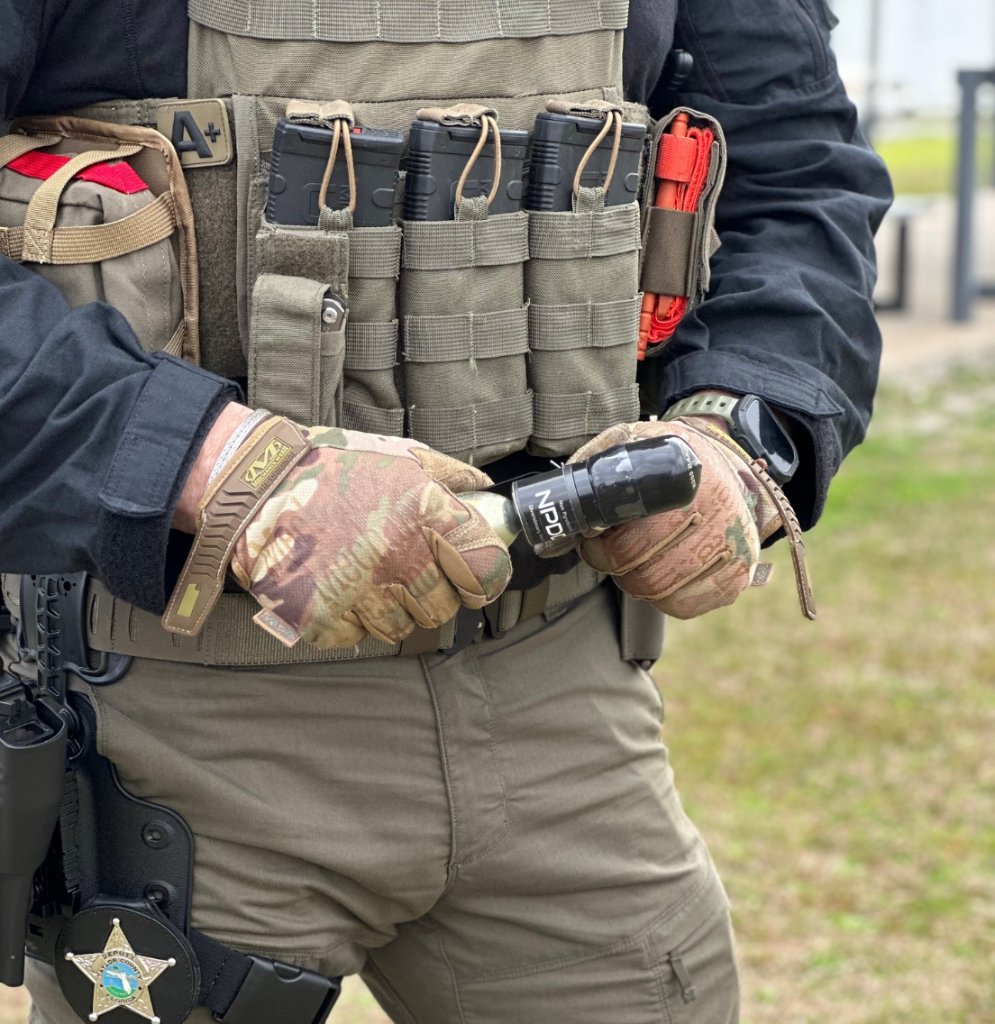
The FBI released its 2025 Law Enforcement Officers Killed and Assaulted (LEOKA) special report on May 11, 2026, putting a stark number on the year: 90,178 officers were assaulted in the line of duty across the United States. That figure translates to an assault rate of 13.8 incidents per 100 officers, according to the report. The FBI said that rate is the highest recorded in the past 10 years — a benchmark that sets the 2025 data apart from every annual figure collected over the preceding decade.
The LEOKA program has operated under standardized FBI criteria since the bureau began collecting nationwide law enforcement crime data in 1930. Every assault counted in the 2025 totals had to meet those established definitions to be included. The report also covers felonious and accidental line-of-duty deaths, though the headline figure driving attention this cycle is the assault volume and its rate per officer.
The 2025 report was compiled alongside comprehensive law enforcement employee counts, which the FBI uses to calculate per-officer rates. The FBI said it continues to process UCR Master Police Employee data to maintain these annual assessments. That infrastructure is what allows year-over-year comparisons to hold statistical weight.
Firearm Injuries Tell a Different Story
Not every trend in the 2025 report points upward. Officers injured specifically by firearms declined for the second consecutive year, according to the data. The 10-year peak for firearm-related officer injuries came in 2023, when 517 such incidents were recorded. That number dropped to 470 in 2024. In 2025, it fell again to 445.
The FBI's report explicitly highlights the divergence between the total volume of assaults and this narrower subset of firearm-related injuries. The two trends are moving in opposite directions. Total assaults are at a decade high. Firearm injuries are at their lowest point in at least three years. That gap is not explained away by a single variable, and the report does not offer a causal interpretation — it presents the counts and leaves the analysis to the agencies receiving the data.
For departments tracking officer safety by incident type, those two numbers require separate readings. A precinct seeing more frequent low-level physical confrontations will register in the assault totals. A jurisdiction where officers face fewer armed encounters will show up in the firearm injury column. The report gives agencies both metrics to work with.
What the LEOKA Program Collects and Why
The LEOKA program compiles data on felonious killings of officers, accidental line-of-duty deaths, and assaults. The FBI designed the data collection to function as a periodic assessment of risks faced by law enforcement personnel, according to the agency. Reporting is built on standardized criteria the FBI established, and participation draws from agencies across the country.
The 2025 special report is not a routine annual release in format alone — it incorporates the employee count data that allows the per-officer rate calculation. That rate, 13.8 per 100 officers, is the figure that positions 2025 as a 10-year outlier. Raw assault counts can shift based on how many agencies participate or how many officers are employed nationally. The rate normalizes for those variables.
The FBI has maintained this data collection since 1930. Ninety-five years of records form the backdrop against which the 2025 figures are read. The agency said the findings are intended to give departments metrics to evaluate officer safety and operational risks — not to mandate policy responses, but to supply the baseline numbers that inform them.
Reading the 2025 Data Alongside Employee Counts
The inclusion of law enforcement employee counts in the 2025 report is not incidental. Those figures feed directly into the assault rate calculation, and they provide context for any agency trying to assess whether its own numbers fall above or below the national rate of 13.8 per 100 officers.
The FBI said it continues to process UCR Master Police Employee data as part of maintaining these assessments annually. That processing work runs in parallel with the incident data compilation. Both streams have to reconcile before a rate can be published.
The May 11, 2026 release date made the 2025 findings publicly available roughly five months into the following calendar year — a timeline consistent with the lag required to aggregate, standardize, and verify submissions from agencies across the country. Departments now have access to the full dataset to benchmark their own assault figures, track firearm injury trends within their jurisdictions, and compare their employee counts against national totals.
The 2025 LEOKA report does not project forward. It records what happened. The record-high assault rate is the documented reality of 2025, and the declining firearm injury count sits alongside it — two numbers that don't cancel each other out.