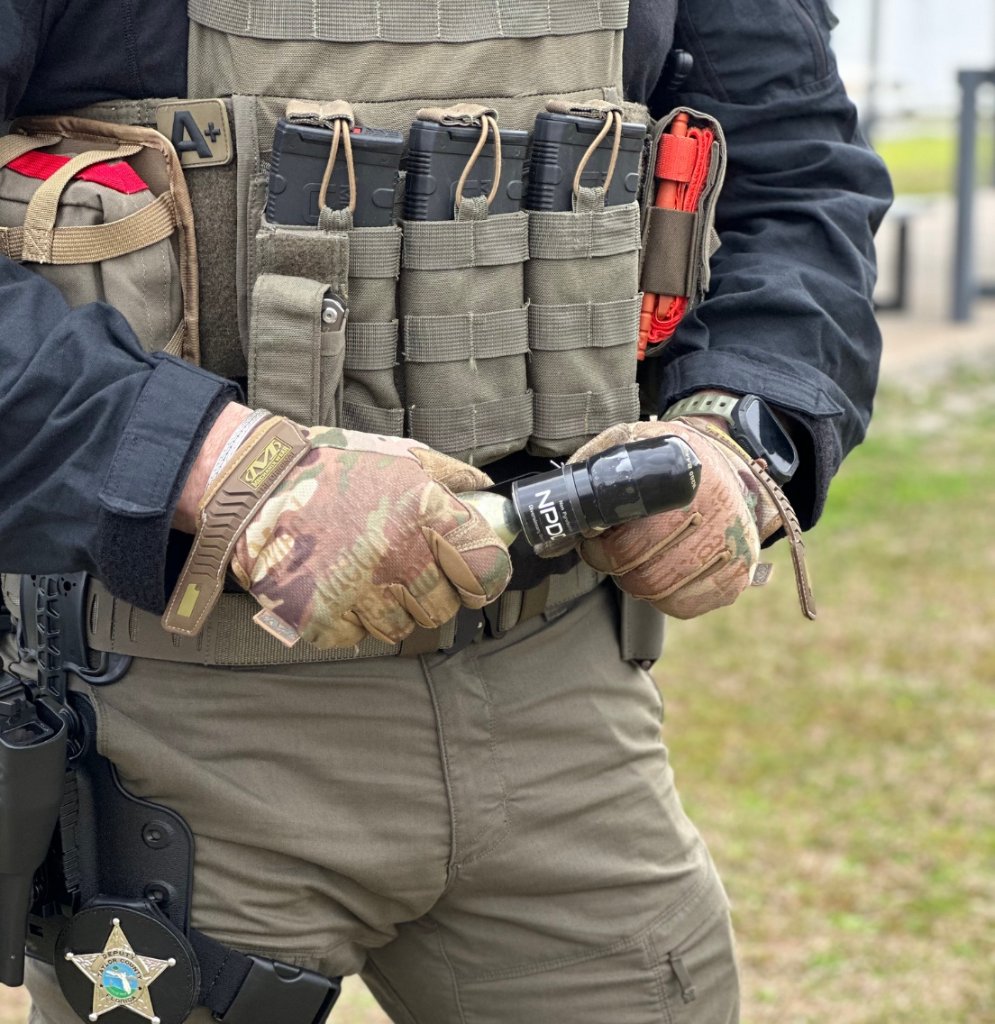
The FBI released the Officers Killed and Assaulted in the Line of Duty, 2025 special report on May 11, 2026, through its Uniform Crime Reporting Program. The report presents a full accounting of officer fatalities and assaults from the preceding calendar year and arrives alongside the 2025 Law Enforcement Employee Counts data, published on the FBI's Crime Data Explorer.
Felonious Deaths: 53 Officers Killed in 2025
Fifty-three law enforcement officers were feloniously killed in the line of duty across the United States in 2025, according to the report. That number is lower than the annual felonious fatality totals recorded in each of the two preceding years. Firearms were the most frequently used weapon type in fatal felonious incidents in 2025, the FBI said.
Fifty-three deaths. But behind the count sits a separate tally of perpetrators. The FBI identified and reported 49 offenders connected to those felonious killings. Of those 49, 95.7 percent were male and 64.4 percent were white. Criminal background records showed that 29 of the 49 offenders had a prior criminal history — meaning more than half came into the encounter with documented records.
The South region recorded 21 line-of-duty officer deaths in 2025, down from 28 in 2024 — a 25 percent decline, according to the report. That drop is notable given that the South has consistently logged the highest aggregate volume of line-of-duty officer deaths across the full 10-year analysis period from 2016 through 2025, the FBI said.
Assault Rate Reaches a Decade High
Participating law enforcement agencies nationwide reported 90,178 officer assaults to the FBI in 2025. That volume produced an assault rate of 13.8 per 100 officers — the highest rate recorded in the past 10 years, according to the report. The rate increased continuously from 2023 through 2025. Year over year, the upward movement was unbroken.
The assault picture is not uniform across weapon types, though. Officers assaulted and injured specifically by firearms numbered 445 in 2025. That is down from 470 in 2024 and well below the 10-year high of 517 recorded in 2023, the FBI reported. So while the overall assault rate climbed to its highest point in a decade, firearm-specific injury incidents moved in the opposite direction across the same two-year span.
That divergence matters for how agencies read the data. The aggregate rate is driven by the full range of assault types, not by firearm encounters alone. Firearms injured fewer officers in 2025 than in either of the two prior years, yet the broader assault environment grew more dangerous by the primary metric the FBI uses.
Accidental Deaths and the Role of Motor Vehicles
Beyond felonious killings, the report addresses accidental line-of-duty fatalities. The FBI noted that motor vehicle accidents accounted for the majority of accidental line-of-duty officer deaths between 2021 and 2025. The five-year span makes that finding structural, not an anomaly tied to a single year.
The report does not break down accidental deaths by year within the 2025 document's primary findings as reflected in the verified data, but the five-year pattern the FBI identified gives agencies a clear signal about where accidental fatality risk is concentrated.
Law Enforcement Employee Counts Published Alongside Casualty Data
The FBI released the 2025 Law Enforcement Employee Counts data collection at the same time as the LEOKA report. That collection captures sworn full-time officer counts and civilian personnel totals submitted voluntarily by participating municipal, county, state, tribal, and federal agencies, according to the FBI. The data lives on the Crime Data Explorer.
The employee counts matter because they form the denominator for the assault rate calculation. The 13.8 per 100 officers figure is only as reliable as the staffing data underpinning it. Agencies that submit complete, accurate employee counts directly shape how the national rate is calculated — and how their own regional picture looks when the FBI compiles year-over-year comparisons.
Participation is voluntary. Not every agency reports. The FBI's UCR Program depends on consistent agency-level submissions to build a nationally representative dataset, and gaps in participation affect the completeness of both the assault counts and the employee totals used to generate rates.
The 2025 report covers a full calendar year in which the assault rate climbed to its highest point since 2016 while the number of officers feloniously killed fell below the two prior years. Those two trends running in opposite directions in the same 12-month period give administrators and policymakers a complicated picture — fewer deaths, more assaults, and a decade-high rate that shows no sign of reversing based on the three-year trajectory the FBI documented.