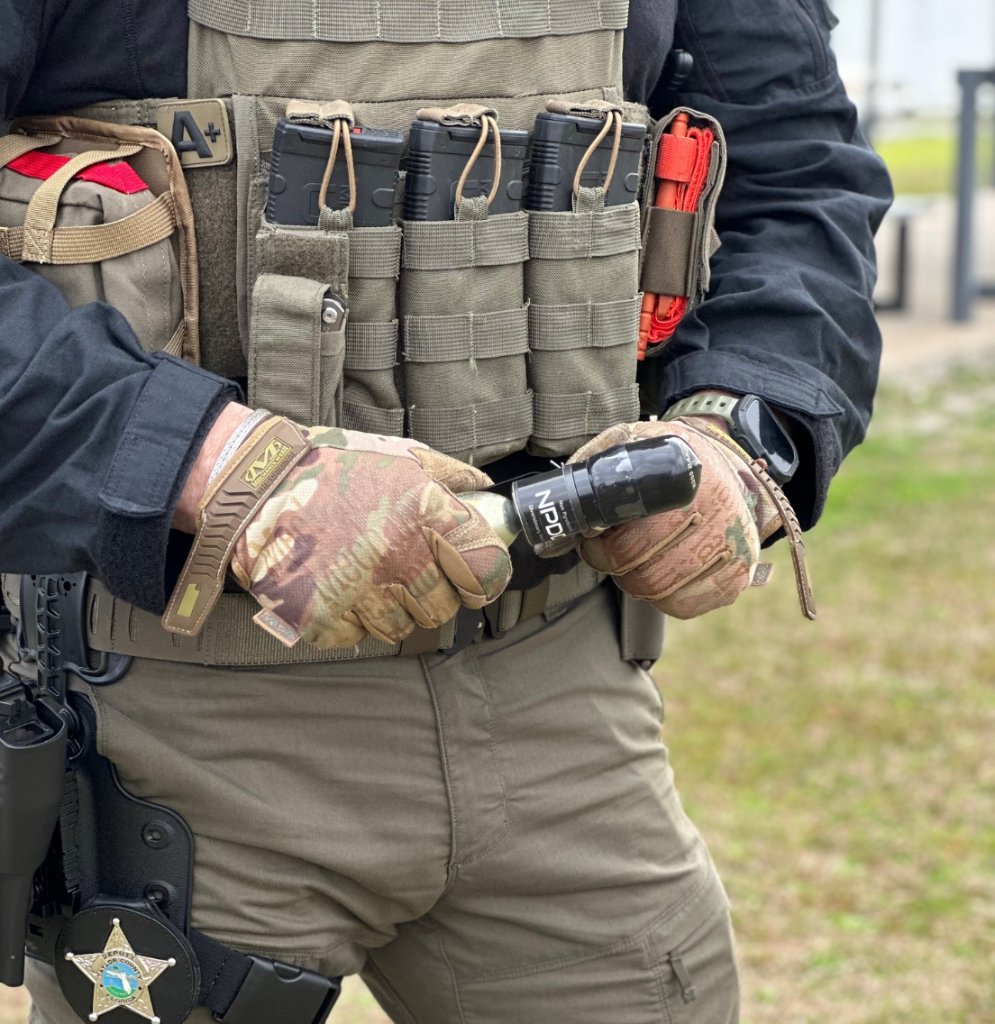
Governor Gavin Newsom signed Senate Bill 937 on September 29, 2026. The law explicitly prohibits California law enforcement agencies from deploying flash-bang grenades to disperse assemblies, protests, or demonstrations. It also bans the use of flash-bang grenades and explosive breaching charges in immigration enforcement operations. Both prohibitions are now codified through amendments to Sections 13652 and 13652.1 of the California Penal Code and the addition of Section 13652.2.
The legislation aligns restrictions on flash-bang grenades with existing state regulations that already govern other less-lethal weapons. That alignment is deliberate. The bill text specifies that kinetic energy projectiles, flash-bang grenades, and chemical agents may only be deployed by peace officers who have completed specialized crowd-control training. No training, no deployment — the bill does not leave room for discretion on that point.
Any authorized use of a flash-bang device must be documented in the California Department of Justice's public use-of-force database, according to the bill's provisions. That documentation requirement creates a public record for every deployment, giving oversight bodies and the public a consistent data trail.
Legislative History and Authorship
Senator Lena Gonzalez introduced SB 937 in the Senate on January 29, 2026. Senator Scott Wiener co-authored the bill. The measure moved through the legislature over several months, with Senate amendments adopted on May 14, 2026, and Assembly amendments following on June 16, 2026.
The legislative intent, as stated in the bill, is to protect public safety and safeguard civil rights during public assemblies. Senator Gonzalez's office confirmed the governor's signature on September 29, 2026.
The California Community Foundation publicly supported the bill's passage. Vice President Shayna Englin represented the foundation's position in favor of the legislation.
Duties Imposed on Local Agencies
SB 937 imposes new duties on local law enforcement agencies, creating a state-mandated local program. That classification matters operationally. Agencies must ensure officers authorized to deploy flash-bang devices have completed the required specialized training before any deployment occurs. They must also submit documentation of any authorized use to the Department of Justice's public database.
The training requirement applies not just to flash-bang grenades but also to kinetic energy projectiles and chemical agents used in crowd-control contexts. Agencies that currently field these tools will need to audit their rosters to confirm which officers have the required credentials. The law does not grandfather in prior deployments — it sets a forward-looking compliance standard.
The bill creates a state-mandated local program, which under California's fiscal framework typically triggers a state obligation to reimburse local agencies for compliance costs if those costs meet the threshold for a reimbursable mandate. That determination is made separately through the Commission on State Mandates.
Immigration Enforcement Context
The signing of SB 937 was part of a broader package of immigration-related legislation that Governor Newsom signed on September 29, 2026. The law is one of a series of California legislative actions aimed at limiting federal immigration enforcement tactics within the state.
The bill's prohibition on using flash-bang grenades and explosive breaching charges for immigration enforcement operations reflects documented incidents. The law follows reports of police using stun grenades to disperse protests at detention facilities, according to the legislative record.
The Long Beach Post News reported that the legislation is intended to disrupt deportation programs and restrict the tactics available to immigration enforcement agencies operating in California. The ban on explosive breaching charges is specific to immigration enforcement contexts and does not appear to restrict their use in other operational settings under the bill's text as described.
California has enacted multiple laws in recent years placing restrictions on how federal immigration enforcement may operate within its jurisdiction. SB 937 adds a tactical-use component to that framework — targeting the specific tools agencies can deploy, not just how they coordinate with federal authorities.
What Comes Next
The law took effect upon signing on September 29, 2026. Agencies across California now face the compliance requirements immediately. Officers deploying flash-bang devices without documented specialized training would be acting outside the law's authorization.
The Department of Justice's public use-of-force database becomes a key accountability mechanism. Each authorized deployment must be entered into that system, creating an accessible record. Researchers, journalists, oversight boards, and the public can use that database to track how and where flash-bang grenades are deployed going forward.
For law enforcement administrators, the practical steps are clear: audit current training certifications for crowd-control munitions, establish a documentation pipeline to the DOJ database, and review any standing orders or policies that currently authorize flash-bang use in protest or immigration enforcement contexts. Those policies must now conform to SB 937.