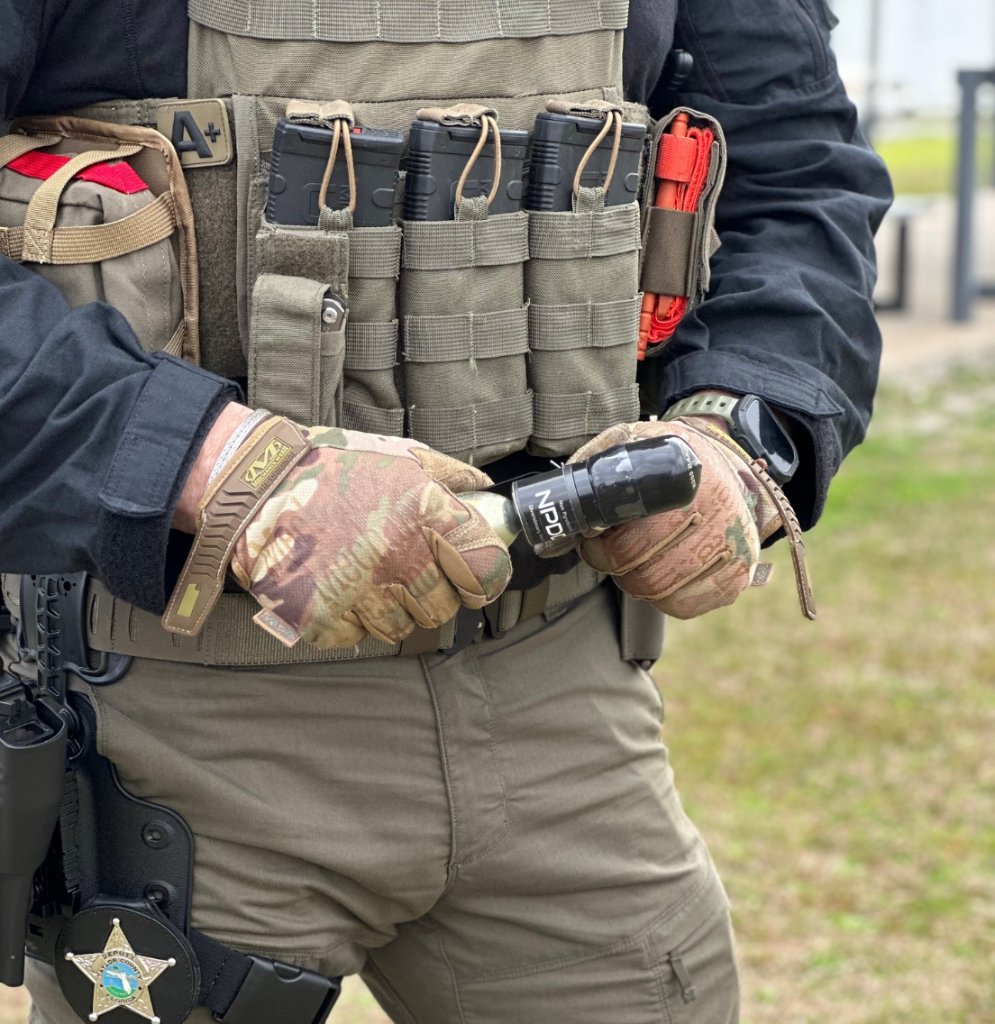
A recent decision from the Fourth Circuit Court of Appeals has sent ripples through the law enforcement community by refining the 'proportionality' test for less-lethal force. The case focused on the prolonged deployment of aerosolized PAVA during a large-scale civil disturbance, where the court found that the continuous saturation of an area after initial dispersal orders were met constituted excessive force. This ruling establishes a new precedent for how long and how intensely an agency can employ chemical irritants before the deployment becomes a constitutional violation.
Key Details
The court emphasized the concept of 'temporal necessity,' ruling that once the immediate threat of violence or property destruction has subsided, the continued use of chemical agents to prevent crowd re-assembly must be justified by specific, articulable risks. The ruling also scrutinized the lack of an 'exit path' during the deployment, noting that saturating a geographic area without providing a clear, un-irritated path for egress is a failure of tactical planning. This case specifically addressed the use of high-capacity aerosol delivery systems and PAVA-based projectiles in confined urban corridors.
Broader Context
For years, the 'area denial' doctrine allowed agencies to maintain perimeters using persistent chemical irritants. However, as medical research on long-term respiratory impacts has advanced, judicial scrutiny has intensified. We are seeing a national trend where courts are no longer treating less-lethal tools as a monolith; instead, they are looking at the specific delivery mechanism and the duration of exposure. This follows similar rulings in the Ninth and Second Circuits, suggesting a growing judicial consensus that the duration of less-lethal force is as critical as the initial decision to deploy.
Implications for Law Enforcement
Agencies must now adjust their crowd management protocols to include 'saturation windows.' This means that supervisors on the ground must be trained to monitor the density of chemical agents and order a cessation of deployment once tactical objectives are achieved. Furthermore, incident command systems must document the specific threats that justify each subsequent volley of irritants. This ruling also highlights the importance of using precision delivery systems—like individual pepper ball rounds—rather than wide-area aerosol foggers when targeting specific agitators within a crowd.
Conclusion
The transition from broad dispersal tactics to precision engagement is no longer just a tactical preference; it is a legal mandate. Command staff should update their Use of Force manuals to include specific guidance on the duration of chemical exposure and ensure that dispersal orders are clearly timed and documented to demonstrate that the force used was both necessary and proportional to the evolving threat environment.