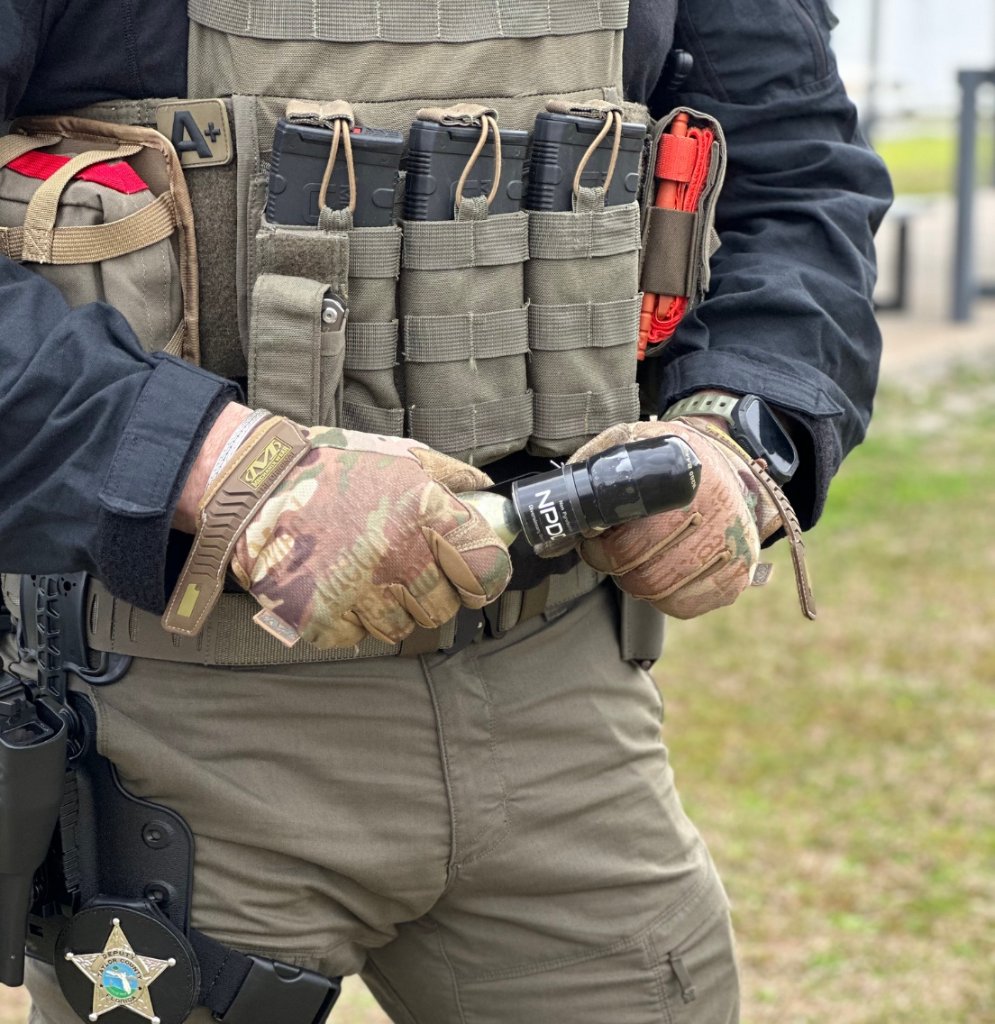
The landscape of less-lethal procurement is undergoing a significant transformation as of July 2026, driven by a convergence of federal legislative reform and massive agency-level solicitations. The recent passage of House legislation aimed at redefining less-lethal projectile devices marks a pivotal shift in how these tools are classified and taxed at the federal level. Simultaneously, the Department of Homeland Security (DHS) has initiated a $50 million procurement surge for specialty munitions, signaling a robust federal commitment to modernizing crowd control capabilities. For law enforcement command staff, these developments represent a unique window to upgrade aging inventories while navigating a more favorable fiscal environment.
Key Details
In early 2026, the U.S. House of Representatives passed critical legislation that establishes a distinct legal definition for less-than-lethal projectile devices. According to House Passes Ways and Means Legislation to Provide Better Access to Life-Saving Tools for Law Enforcement, this move effectively distinguishes these tools from traditional firearms under the Firearms and Ammunition Excise Tax (FAET) and the National Firearms Act (NFA). Previously, certain systems were subject to a 10% to 11% excise tax, a cost burden that often trickled down to local municipal budgets. By removing these devices from the NFA’s restrictive oversight, the bill streamlines the acquisition process for agencies seeking advanced kinetic and chemical delivery systems.
Parallel to this legislative shift, Customs and Border Protection (CBP) has moved forward with a solicitation for specialty munitions valued at up to $50 million, as reported in DHS Launches Less Lethal Chemical Weapons Buying Spree. This contract focuses on a wide array of systems, including 40mm chemical irritant rounds, PAVA-based projectiles, and blunt-force trauma munitions. Furthermore, the Federal Emergency Management Agency (FEMA) published the Fiscal Year 2026 Homeland Security Grant Program (HSGP) Notice of Funding Opportunity on June 24, 2026, providing the necessary capital for state and local agencies to tap into these newly tax-exempted technologies, per Homeland Security Grant Program | FEMA.gov.
Broader Context
The push for fiscal reform in the less-lethal sector follows years of operational friction regarding the classification of non-firearm launchers. Historically, the inclusion of certain compressed-air and spring-loaded systems under the NFA created administrative hurdles for agencies, including lengthy registration periods and specialized tax requirements. The current legislative trend reflects a growing consensus that less-lethal tools are essential for de-escalation and should be treated as distinct from lethal hardware.
This shift is also occurring against a backdrop of varying agency policies. Recent audits highlighted in Guide: The Less-Lethal Weapons Used by the DHS have noted discrepancies in how federal components categorize 40mm launchers—ranging from "less-lethal" to "deadly force" depending on the specific deployment scenario. The current federal procurement surge suggests a move toward a more unified standard, prioritizing precision-guided munitions and multi-shot platforms that offer officers greater versatility in dynamic crowd environments.
Implications for Law Enforcement
For local and state agencies, the immediate implication is a significant reduction in the total cost of ownership for less-lethal programs. The removal of the FAET tax, combined with the availability of FY2026 HSGP funds, allows departments to stretch their budgets further, potentially transitioning from single-shot 37mm systems to more advanced, rifled 40mm multi-shot launchers.
However, this acquisition surge must be met with updated POST certification and use-of-force training. As agencies adopt higher-pressure PAVA systems and kinetic impact rounds with extended ranges, training protocols must evolve to include cognitive-load testing and target discrimination. Command staff should also anticipate increased scrutiny regarding the "area saturation" vs. "point-target" deployment of chemical agents, as federal oversight bodies continue to call for standardized data collection on injury outcomes associated with these munitions, a need identified in Law Enforcement Use of Less-than-Lethal Weapons: Considerations for Congress.
Conclusion
The alignment of federal tax relief and substantial grant funding creates a strategic opportunity for law enforcement leadership to overhaul their less-lethal capabilities. By leveraging the current FY2026 funding cycle, agencies can acquire precision-based crowd control systems that were previously cost-prohibitive. The long-term success of this modernization effort will depend on the ability of command staff to integrate these new tools into a cohesive use-of-force framework that prioritizes both officer safety and public accountability.