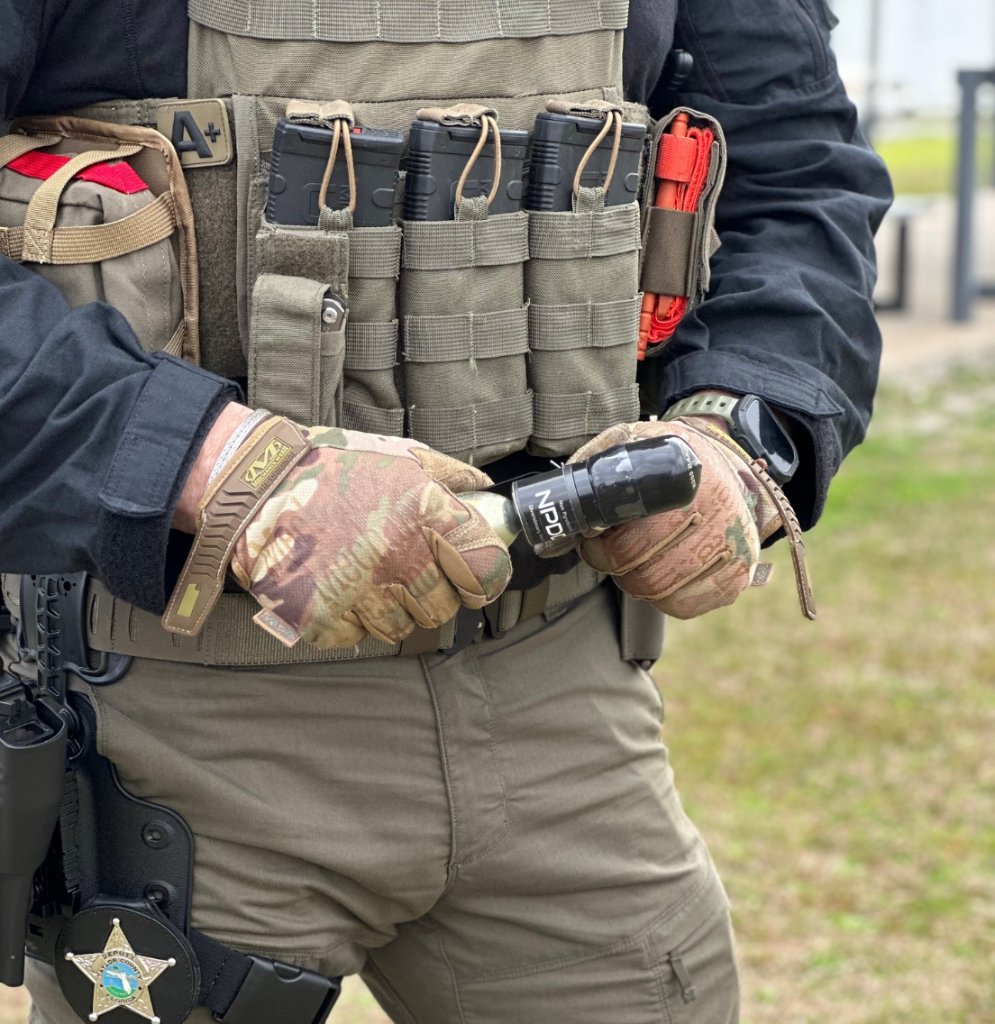
Governor Gavin Newsom signed SB 937 on September 29, 2026. The bill amends California Penal Code sections 13652 and 13652.1, which previously governed restrictions on kinetic energy projectiles and chemical agents. SB 937 pulls diversionary devices into that same statutory framework. It also brings explosive breaching charges — specifically detonating cords, sheet explosives, and shaped charges — under the same set of rules.
Diversionary devices, commonly called flash-bangs or stun grenades, are pyrotechnic tools designed to emit high-intensity light and sound to disorient subjects. According to the Congressional Research Service, traditional flash-bangs can produce up to 180 decibels of sound and 8 million candela of light. Those figures matter for departments weighing deployment policy, because accidental flame ignition and serious injury are documented concerns with pyrotechnic devices of that intensity.
Core Prohibitions and Deployment Requirements
The law sets three hard limits.
First, diversionary devices and explosive breaching charges may not be used for immigration enforcement. The exception is narrow: joint task force operations, or circumstances otherwise permitted by state law. Outside those two carve-outs, the prohibition is absolute.
Second, no peace officer may deploy a diversionary device unless that officer has completed certified training on proper use. The La Verne Police Department, for example, already requires annual recertification for SWAT operators in the legal and practical use of diversionary devices — a practice now effectively codified as the minimum bar under California law.
Third, deployment within 300 feet of school grounds, parks, or any area where children are present is prohibited outright. That geographic buffer applies regardless of the nature of the incident.
Agencies are also now required to report each use of a diversionary device. The statute does not specify a centralized reporting body in the verified text, but the reporting obligation itself creates an accountability trail that did not previously exist for this category of equipment.
Legislative History and the Vote
SB 937 was authored by Senator Lena A. Gonzalez. The bill passed the California Senate on May 27, 2026, with a 29-9 vote. It moved through the remaining legislative process before Newsom signed it on September 29, the same day it became law.
The vote margin — 29 to 9 — reflects a clear majority, though not unanimous support. That split suggests some legislative concern about operational flexibility, particularly for agencies that rely on diversionary devices for high-risk entries. The Pleasanton Police Department, for instance, reported in 2026 that it uses diversionary devices for warrant service and follows best practices including exterior-only deployment. Under SB 937, that kind of operation remains legal, provided the deploying officer holds current certification and the location does not fall within a protected zone.
How Other Agencies Have Approached the Same Questions
California is not operating in isolation. The Albuquerque Police Department updated its use-of-force policy on April 18, 2026, to classify the deployment of a diversionary device without an intermediate barrier that results in injury as a serious use of force. That classification triggers enhanced review and documentation requirements under Albuquerque's framework — an approach that parallels the reporting mandate now embedded in SB 937.
Federal law enforcement and state agencies are increasingly subject to standardized review frameworks for high-risk tactical equipment deployment, according to available policy records. The U.S. Chamber of Commerce has engaged in federal rule-making discussions regarding oversight of specialized tactical tools used by state and local agencies, signaling that pressure for structured accountability is coming from multiple directions simultaneously.
On the equipment side, some agencies are exploring battery-powered, non-pyrotechnic alternatives to mitigate fire risks and improve reusability. SB 937 does not mandate a switch to those alternatives, but the law's emphasis on certified training and incident reporting creates conditions where agencies using higher-risk pyrotechnic devices will face greater documentation burdens than those using lower-risk options. That calculus may shape procurement decisions over time.
What Departments Should Do Next
For California law enforcement agencies, the immediate priorities are straightforward. Any officer who currently deploys diversionary devices needs to verify that existing training meets the certified-training standard the law requires. Departments without formal recertification cycles — unlike La Verne, which already mandates annual recertification — will need to build that into their training calendars.
Agencies also need to establish or update incident documentation systems to capture each deployment for the new reporting requirement. Departments operating in jurisdictions near schools or parks should map their primary operational areas against the 300-foot buffer now written into statute.
For agencies that participate in joint task force operations involving federal immigration enforcement, legal counsel should review the scope of the joint-task-force exception carefully. The exception exists, but its boundaries will likely be tested in practice.