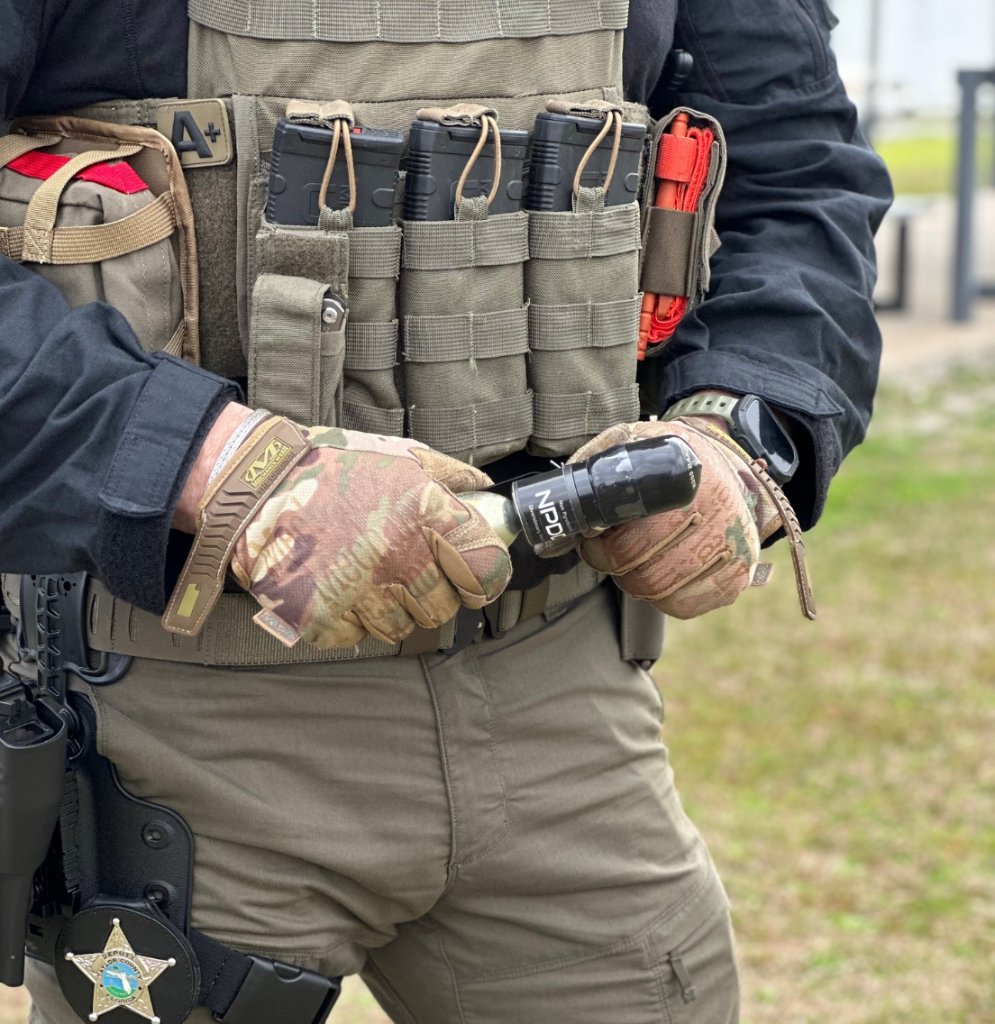
In a significant shift for public order policing, a federal appellate court issued a ruling this month that clarifies the constitutional limits of chemical irritant deployment. The court's decision centers on the distinction between passive resistance and active physical threats during mass demonstrations. For command staff and legal advisors, this ruling signals a departure from the traditional leeway granted to agencies during dispersal operations, emphasizing that the use of chemical agents must be objectively reasonable and specifically targeted toward mitigating violence rather than simply clearing a thoroughfare.
Key Details
The ruling originated from a 2025 civil suit involving the deployment of chemical agents against a crowd that had refused multiple orders to disperse but remained largely non-violent. The court found that the indiscriminate use of chemical irritants against a non-threatening crowd violated the Fourth Amendment's protection against unreasonable seizure. Crucially, the court established a two-prong test for future deployments: first, the presence of a specific, articulable threat to officer or public safety, and second, the exhaustion of alternative communication or low-level physical tactics before escalating to chemical tools. The decision also noted that the duration and volume of the deployment must be strictly proportional to the immediate threat observed on the ground.
Broader Context
This judicial intervention reflects a growing national trend toward narrowing the scope of less-lethal force in crowd management. Over the past three years, several states have passed legislation limiting the types of munitions allowed in civil unrest scenarios. However, this federal ruling provides a constitutional baseline that affects all jurisdictions within the circuit and likely sets a persuasive precedent for other federal courts. It highlights the increasing scrutiny on 'mass-effect' tools, where the impact of a munition cannot be restricted to a specific high-risk individual, thereby affecting bystanders or peaceful participants within a crowd.
Implications for Law Enforcement
For operational commanders, the primary implication is the need for immediate policy review. Standard Operating Procedures (SOPs) that allow for chemical dispersal based solely on the failure to follow an order are no longer legally sufficient in the eyes of this court. Training must now focus on the 'articulable threat' requirement, teaching officers to identify and document specific violent acts that justify the use of less-lethal munitions. Furthermore, body-worn camera and aerial surveillance footage will become even more critical for justifying these actions in post-incident reviews. Agencies should also consider the logistical shift toward more precise delivery systems that allow for the targeted application of irritants, reducing the likelihood of collateral exposure.
Conclusion
The era of broad-spectrum crowd dispersal through chemical means is facing a fundamental legal challenge. Command staff should treat this ruling as a catalyst for professionalizing crowd management tactics, moving toward a precision-based model. By integrating higher thresholds for deployment into policy and training, agencies can better protect themselves from litigation while maintaining the ability to neutralize genuine threats to public safety. The focus must remain on documentation and the clear communication of the 'necessity' behind every less-lethal deployment.