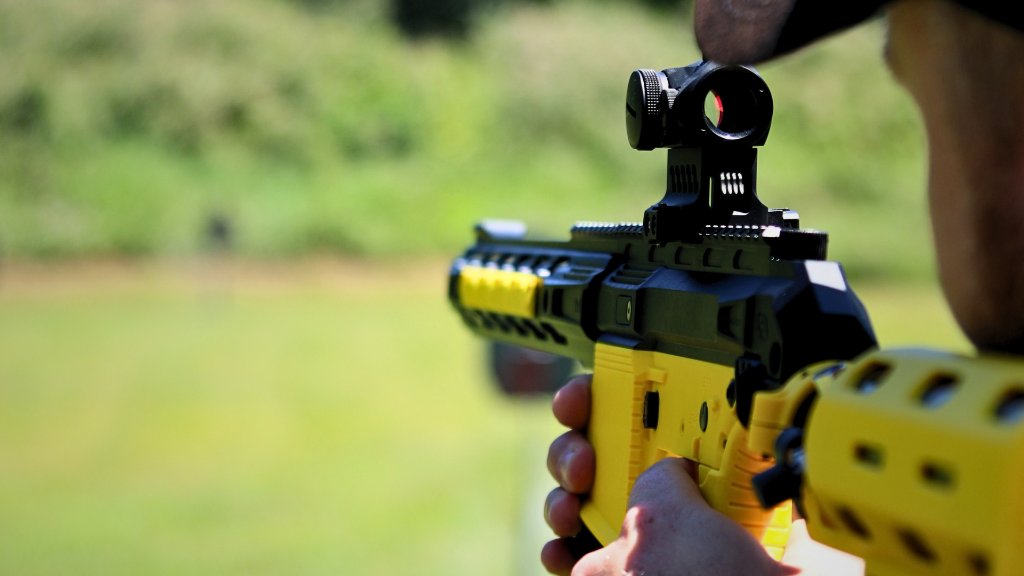
As law enforcement agencies face increasingly complex crowd management challenges, the demand for high-capacity, reliable less-lethal hardware has reached an all-time high. The shift toward multi-shot 40mm launchers has introduced new technical considerations that extend beyond simple firepower. Modern procurement is now focused on 'operational resilience'—the ability of a launcher system to maintain precision and mechanical integrity under extreme environmental stress and high-volume firing cycles.
Key Details
Recent federal solicitations for less-lethal systems have introduced new technical benchmarks that launchers must meet to qualify for procurement. These include a 'Mean Rounds Between Failure' (MRBF) standard that exceeds previous requirements by 40%, ensuring that multi-shot cylinders do not jam during critical dispersal operations. Additionally, new standards for 'thermal stability' have been implemented, requiring launchers to maintain trigger-pull consistency and barrel alignment even after exposure to extreme urban heat or prolonged direct sunlight. These specifications are designed to prevent the mechanical 'creep' that can affect the accuracy of kinetic impact projectiles over the course of a long shift.
Broader Context
The move toward multi-shot systems is a direct response to the limitations of single-shot launchers in large-scale civil unrest. During prolonged engagements, the time required to reload a single-shot system can leave officers vulnerable and result in a loss of tactical momentum. However, the increased complexity of multi-shot mechanisms introduces more potential points of failure. The current focus on resilience standards is an effort to harmonize the need for high-capacity engagement with the absolute necessity of equipment reliability. This mirrors trends in military procurement where 'ruggedization' is a primary metric for tactical gear.
Implications for Law Enforcement
Commanders and logistics officers must now look beyond the initial purchase price when evaluating new less-lethal platforms. Total cost of ownership must account for the rigorous maintenance schedules required to keep high-capacity launchers at peak performance. Agencies should prioritize systems that offer modular components, allowing for field repairs without the need for specialized armory tools. Furthermore, the adoption of these standardized systems simplifies mutual aid agreements, as officers from different jurisdictions can operate standardized equipment with minimal cross-training. Integrating these resilience standards into the RFP process is critical for any agency looking to modernize its crowd control capabilities.
Conclusion
In the high-stakes environment of crowd management, equipment failure is not an option. The new focus on operational resilience for 40mm launchers ensures that officers have the tools they need to maintain public order safely and effectively. By adhering to these emerging technical standards, law enforcement agencies can invest in hardware that is not only powerful but also durable enough to withstand the rigors of modern policing.