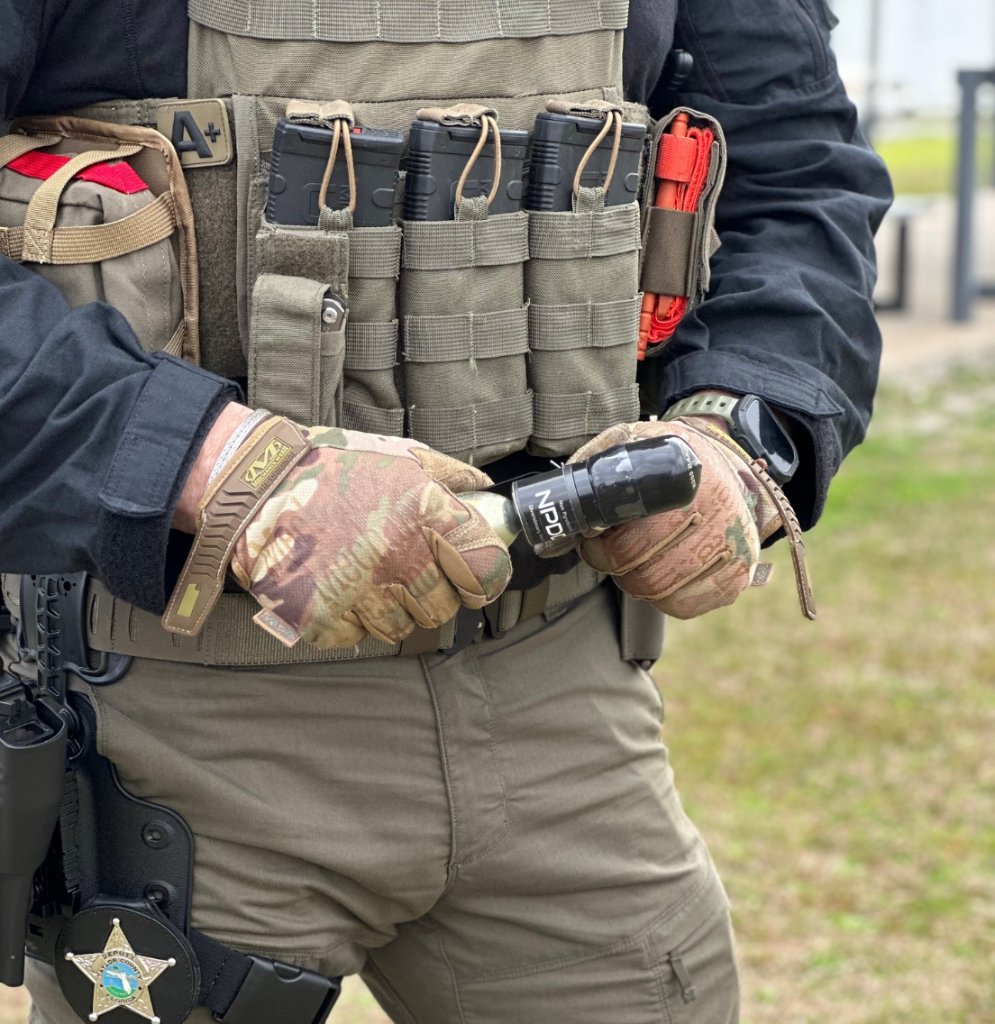
On August 19, 2026, Maria Del Carmen Negrete Raya was arrested for battery on a law enforcement officer during an immigration enforcement operation in Fort Myers, Florida. The Florida Highway Patrol, ICE, and the Lee County Sheriff's Office collaborated on the investigation. Florida Attorney General James Uthmeier stated publicly that Florida state authorities will prioritize prosecution of individuals who assault law enforcement officers during such operations. The arrest drew attention from state officials precisely because it arose during a joint agency field operation — the kind of multi-agency coordination that can complicate jurisdictional questions but, in this case, produced a swift arrest.
Federal Sentencing in California Rock-Throwing Attack
On September 11, 2026, a federal judge sentenced Elpidio Reyna, of Compton, California, to three years in federal prison for assaulting a federal officer. The incident occurred on June 7, 2025, during an immigration enforcement operation near a Home Depot in Paramount, California. Court records show Reyna threw rocks at a convoy of U.S. Customs and Border Protection vehicles. One rock shattered a vehicle window. A federal officer sustained a laceration to the forehead as a direct result.
Reyna pleaded guilty on February 17, 2026, to a single count of assault on a federal officer by a deadly or dangerous weapon resulting in bodily injury. The sentencing, handed down roughly fifteen months after the original attack, reflects the federal judiciary's treatment of objects like rocks as deadly or dangerous weapons when used against officers in the field. The Department of Justice has noted that the Reyna sentencing is consistent with its stance on violent interference with federal enforcement operations.
Stabbing in Ohio and Fatality in South Carolina
On August 29, 2026, a Gibsonburg, Ohio, police officer was severely wounded after being stabbed while attempting to escort a suspect off private property. Specific details on the suspect and the officer's current condition were not released at the time of reporting, but the attack added to a string of violent incidents against officers in late August.
Two days later, on August 31, 2026, Officer Chris DeLong of the Columbia Police Department was fatally shot in the line of duty. DeLong had served with the Columbia Police Department since 2025. His death marked one of the most serious outcomes in the cluster of incidents recorded across that final week of August 2026. No further details on the circumstances of the shooting were available from the department at the time of this report.
LEOKA Data and Federal Tracking Infrastructure
The FBI's Law Enforcement Officers Killed and Assaulted program — known as LEOKA — continues to track felonious and accidental line-of-duty deaths and assaults nationwide. The LEOKA dataset was last updated by the FBI on April 20, 2026. The Department of Justice maintains the LEOKA taxonomy to categorize line-of-duty incidents for policy analysis, allowing agencies and policymakers to break down assaults by circumstance, weapon type, and duty assignment.
Data from the FBI's Crime Data Explorer covers officer assault statistics from 2020 to the present. Recent reports indicate that officers face increasing risks during routine traffic stops and enforcement operations. Law enforcement agencies are also increasing their use of body-worn camera footage to document the nature of violent encounters with suspects — footage that has become central to prosecutions like Reyna's, where establishing the sequence and severity of an attack directly affects charging decisions.
The Reyna case in particular illustrates how federal charging under the assault-on-a-federal-officer statute can produce sentences that state-level battery charges might not. Three years in federal prison for a rock-throwing incident may read as severe to some observers, but court records confirm the injury was real — broken glass, a laceration, a federal officer treated for wounds sustained in the line of duty. The plea, entered more than eight months after the attack, resolved the case before trial.
Back in Florida, the Negrete Raya arrest and Uthmeier's public statement signal that state prosecutors intend to treat battery on officers during immigration operations as a prosecutorial priority, not a case to defer or reduce. How that plays out at the charging and sentencing stage remains to be seen, but the attorney general's position is on record.
For agencies reviewing field operation protocols, the four incidents — Fort Myers, Paramount, Gibsonburg, Columbia — span different enforcement contexts: immigration operations, property disputes, line-of-duty patrol. No single tactical setting explains all of them. What they share is violence directed at officers during active field contact, the exact category the LEOKA program was built to count.