The King County Sheriff's Office has updated its policies governing public order and civil disturbances, according to the Office of Law Enforcement Oversight. A centerpiece of the update is the creation of a Rapid Deployment Force — a specialized unit built specifically for crowd management operations. The RDF is not a standing patrol unit repurposed in a crisis. It is purpose-trained for this mission.
The Sheriff's Office is required to notify OLEO whenever the RDF is staged or deployed, the policy states. That notification requirement puts an outside oversight body in the loop before or as operations unfold, not after the fact.
Kettling Restrictions and the Mass Arrest Standard
The updated policy imposes specific conditions on kettling — the tactic of encircling a crowd to prevent movement. Kettling is now restricted to situations where there is individualized probable cause for arrest, according to OLEO. That is a significant constraint. Broad cordon operations that sweep up bystanders alongside participants are no longer permitted under the standard.
Even when individualized probable cause exists, the policy adds procedural gates. The Incident Commander must authorize mass arrests, issue clear warnings, and provide protesters a sufficient opportunity to comply before a kettle can be executed. Mass arrests themselves are designated a last resort. The policy does not treat them as a routine crowd control tool.
Incident Commanders also carry new responsibilities around dispersal orders. They are required to define explicit thresholds and conditions that trigger a dispersal command — not general unrest, but specific, articulable conditions. Announcements must be made in a manner that promotes public safety and reduces deputy discretion. That language is a direct response to concerns that vague or inconsistently delivered orders have historically contributed to confusion and legal challenges.
Body Cameras, Medical Access, and Armed Groups
All KCSO personnel participating in crowd management must wear and activate body-worn cameras, the policy mandates. No exceptions are described. The requirement applies across the deployment, not only during use-of-force incidents.
The policy also addresses a scenario that departments sometimes sidestep: what happens when someone in a crowd is injured. KCSO officers are required to allow all injured individuals access to medical aid, regardless of how the injury occurred. The policy does not condition medical access on the person's conduct or legal status at the time of injury.
On the question of outside groups, the policy is direct. KCSO personnel are explicitly prohibited from collaborating with vigilantes, armed groups, or other non-law enforcement entities during crowd management events. The prohibition covers coordination during operations — not merely formal partnerships.
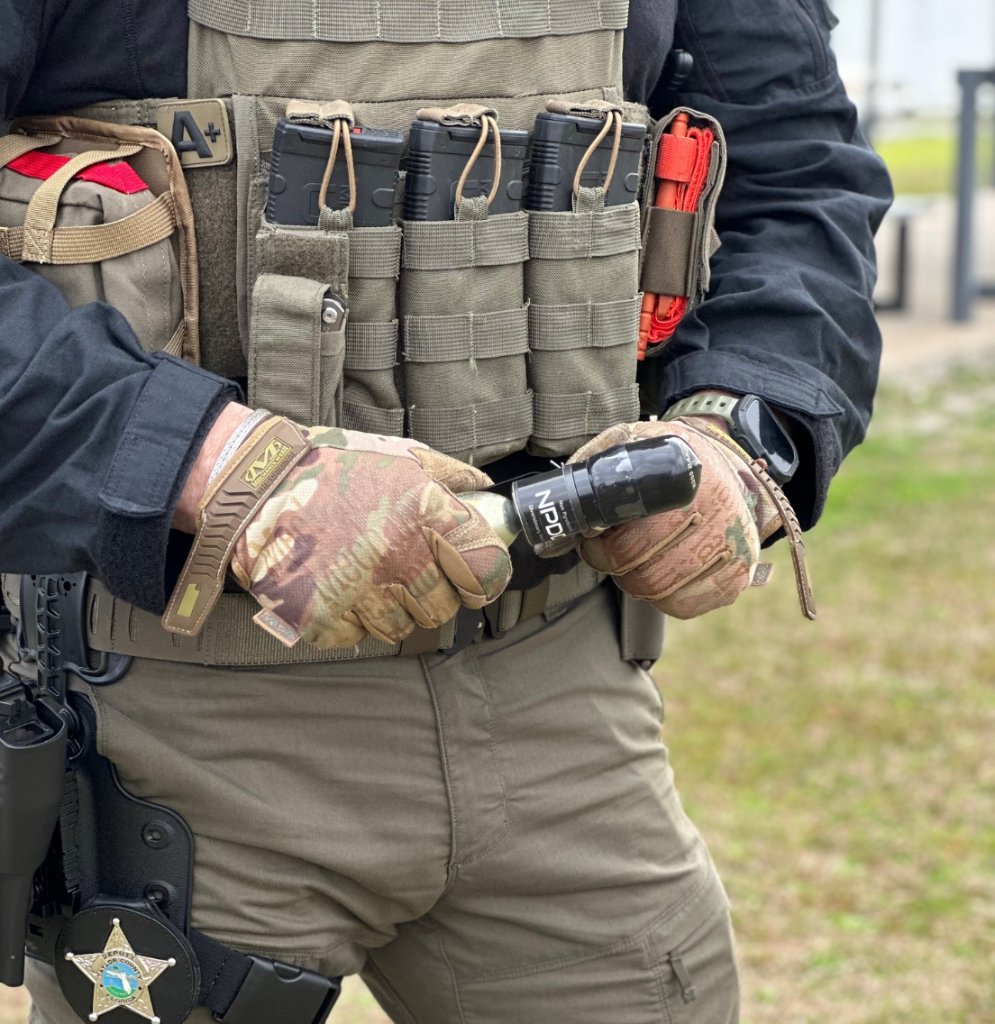
Less-lethal impact munitions are also subject to new restrictions. The updated guidelines limit their use, citing the risk of serious bodily harm to event participants. The policy does not name specific devices or manufacturers, but the restriction applies to the category broadly.
The Dialogue Team and Community Recommendations
The Sheriff's Office has established a Dialogue Team alongside the RDF. The Dialogue Team's function is communication — between crowd participants and the department — rather than enforcement. Members have completed 40-hour training courses focused on crowd psychology and protest management, according to OLEO. That training load reflects a deliberate investment in a de-escalation track that runs parallel to the enforcement structure.
The 18 policy recommendations underlying these changes came out of a partnership between OLEO and five community organizations: The Arc of King County, Eastside For All, Look2Justice, People Power Washington, and Urban Family. That list spans disability rights, immigrant advocacy, criminal justice reform, and community organizing. The breadth of the coalition shaped the scope of the recommendations, which address everything from tactical restrictions to transparency requirements.
The updated policies formally adopt the principles of proportionality and differentiation. Proportionality requires that tactics match the specific level and nature of a threat. Differentiation requires that responses account for the varied roles and behaviors of individuals in a crowd — not treating a passive bystander identically to someone actively committing an offense. Together, those principles are written into the policy as a check on blanket crowd-wide responses.
The department confirmed it has received the OLEO recommendations and has begun a formal review. Updates on implementation status are expected by March 2027. That timeline gives the Sheriff's Office roughly 18 months from the policy publication date to report back on which recommendations have been adopted, modified, or declined — and to explain why.