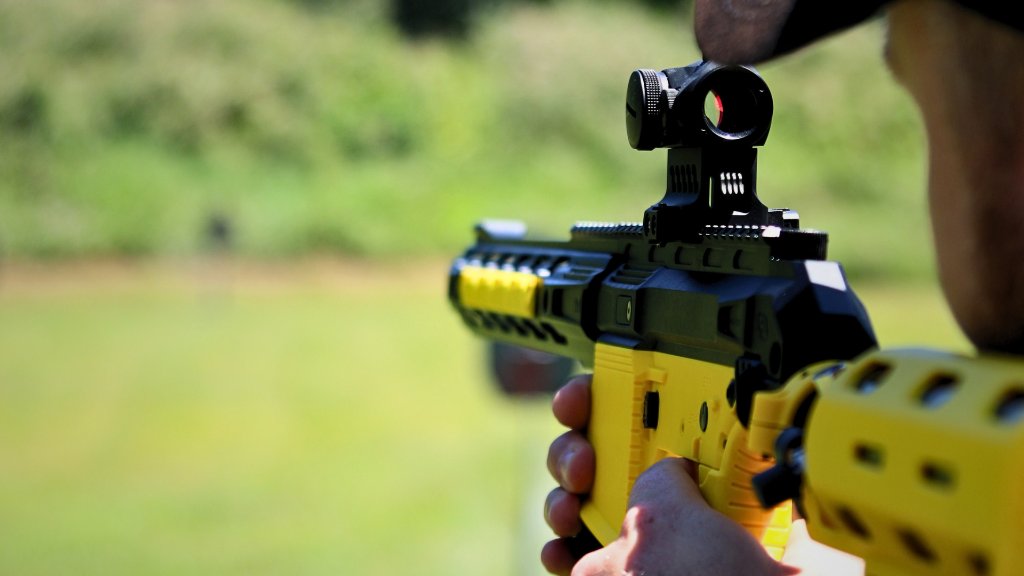
As law enforcement agencies face increasing pressure to resolve high-risk encounters from a distance, the reliability of extended-range kinetic impact munitions (ER-KIM) has become a top priority. Recent developments in materials science have led to a new generation of 40mm projectiles designed for greater accuracy and more predictable energy transfer. For command staff, the focus is moving beyond the initial procurement of launchers to the scientific validation of the rounds themselves, ensuring that 'less-lethal' remains a true description of the tool's physiological impact.
Key Details
Modern ER-KIM systems, such as advanced foam-baton and sponge-tip rounds, are now being evaluated based on their energy dissipation coefficients. This metric measures how much kinetic energy is absorbed by the target versus how much is retained, which is critical in preventing penetrating injuries. New federal guidelines suggest that munitions must maintain a consistent velocity within a 5% margin of error across their effective range (typically 5 to 40 meters). This consistency allows for more accurate 'point-of-aim, point-of-impact' results, reducing the risk of hitting unintended areas like the head or neck during dynamic deployments.
Broader Context
The move toward higher precision in less-lethal projectiles coincides with the adoption of multi-shot launcher platforms by agencies such as the U.S. Capitol Police and Customs and Border Protection (CBP). These platforms allow for rapid follow-up shots but require munitions that perform identically under varying environmental conditions. The industry is responding by moving away from hand-filled bean bag rounds, which are prone to bunching and inconsistent flight, toward aerodynamically stabilized projectiles that provide a more stable trajectory and predictable terminal ballistics.
Implications for Law Enforcement
For tactical teams, the adoption of standardized, high-performance projectiles simplifies the training process. Officers can now train with 'matching' inert rounds that mimic the flight characteristics of live munitions exactly. From a risk management perspective, using rounds that meet recognized NIJ-certified performance standards provides a robust defense in litigation, as it demonstrates a commitment to using the most technologically advanced and safest equipment available. However, these advancements also require armorers to implement stricter storage and rotation protocols to ensure munition integrity.
Conclusion
The engineering behind less-lethal projectiles is finally catching up to the sophisticated needs of modern policing. By prioritizing the procurement of rounds with high energy dissipation and consistent flight paths, agencies can significantly improve the safety outcomes of their use-of-force incidents. Command staff should view these technical upgrades not just as gear replacements, but as essential components of a comprehensive risk mitigation strategy that protects both the public and the agency's reputation.